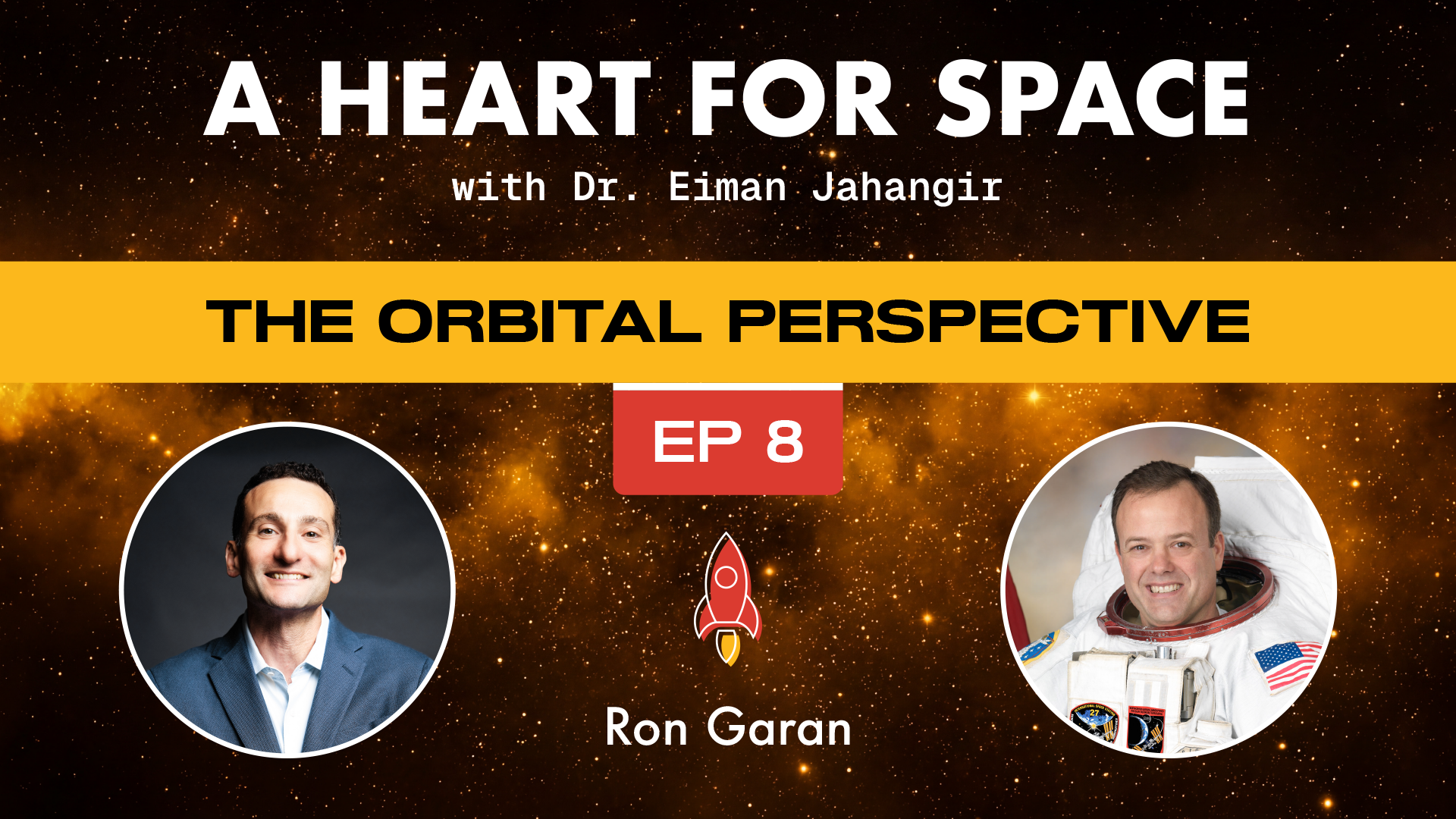
What Is the Orbital Perspective? How Seeing Earth From Space Changes Astronauts
The orbital perspective is a cognitive shift experienced by astronauts who look back at Earth from the vacuum of space, realizing the planet is a single, fragile, and deeply interdependent ecosystem. This psychological transformation strips away visible political borders, reframing humanity's biggest challenges as shared planetary problems rather than isolated national issues.
Key Takeaways
- The orbital perspective is a cognitive shift where astronauts realize Earth is a single, fragile, and interdependent ecosystem.
- Seeing the planet without political borders highlights that humanity shares one common life support system.
- Ron Garan argues that humanity has all the technology to solve major crises, but lacks planetary-scale collaboration.
- Treating Earth as a 'wholly owned subsidiary of the global economy' creates a dangerous misconception about our planetary boundaries.
Understanding the Cognitive Shift in Space
For most of human history, our perspective of Earth has been ground-level and localized. We look up at the sky or across a landscape, defining our existence by countries, states, and cities. However, stepping off the planet entirely shatters this paradigm. When former NASA astronaut Ron Garan and other spacefarers look out the window of a spacecraft like the Space Shuttle or the Soyuz, they do not see warring factions or ideological boundaries. They see a glowing blue sphere suspended in the infinite, pitch-black void of the cosmos.
This psychological phenomenon, often related to the broader "overview effect," forces a radical recalibration of the mind. Astronauts realize instantaneously that the atmosphere protecting all of humanity is paper-thin. The realization is not merely intellectual; it is visceral. It is the moment a lightbulb switches on, illuminating the truth that we are not just inhabitants of a shared space, but that we are completely interdependent.
The Fragility of Our Life Support System
In orbit, the illusion of infinite resources vanishes. Earth looks impossibly delicate. Every breath of air, every drop of fresh water, and every living creature exists inside a microscopic biosphere floating in a lethal environment. This stark realization transforms how astronauts view terrestrial conflicts. Fights over geographic territories suddenly appear trivial when viewed against the backdrop of the entire cosmos.
Yet, translating this profound realization back to a ground-bound population remains one of humanity's greatest hurdles. Most people continue to live within deeply entrenched silos, reinforced by modern algorithms and localized media that profit by magnifying human differences rather than celebrating our shared existence.
Planetary-Scale Versus Global-Scale Thinking
A crucial insight stemming from the orbital perspective is the linguistic and conceptual trap of the word "global." We frequently talk about global issues, global markets, and global economies. According to space travelers who have looked down at the curvature of the world, this framing is fundamentally flawed.
We do not live on a globe; we live on a planet. A globe is a human-made mathematical model, whereas a planet is a living, breathing biosphere complete with its own complex life support systems. When society treats the Earth as a wholly owned subsidiary of the global economy, we invert reality. We prioritize financial markets over social structures, and social structures over the planetary biosphere upon which everything ultimately depends.
To secure a sustainable future, humanity must pivot from a fragmented global mindset to a unified planetary perspective. This means recognizing that our economic and social systems are entirely nested within and dependent upon the health of our planetary biosphere.
Overcoming the Golden Lie
Living as though human economies can endlessly exploit natural resources without consequence is what Garan describes as living inside a "golden lie." We convince ourselves that infinite growth on a finite planet is sustainable because our short-term financial metrics reward it. The orbital perspective exposes this lie immediately. From space, the finite nature of Earth's resources is mathematically and visually undeniable.
How to Apply the Orbital Perspective on Earth
You do not need to launch into low-Earth orbit aboard a Russian Soyuz rocket to adopt the orbital perspective. While astronauts are uniquely positioned to witness the beauty of our planet firsthand, anyone can intentionally cultivate this mindset in daily life.
- De-escalate ideological silos: Recognize when digital algorithms are attempting to stoke fear or division between you and people with differing viewpoints.
- Prioritize planetary health: Evaluate personal and community decisions through the lens of how they impact our shared biosphere rather than narrow short-term gains.
- Foster radical collaboration: Look for opportunities to work across cultural, geographic, and political divides to tackle systemic issues like clean water access and renewable energy integration.
By shifting our mental frameworks to mirror those who have looked back at our world from the stars, we can begin building the cooperative frameworks necessary to solve humanity's most complex challenges right here on Earth.
Conclusion
The journey from the launchpad to orbit changes how an astronaut views everything, proving that changing the way we see our world is the essential first step toward truly changing the world itself. To dive deeper into these incredible stories of spaceflight, leadership, and social entrepreneurship, make sure to Listen to the full episode and join Dr. Eiman Jahangir for more inspiring conversations on what lies beyond our limits.
Frequently Asked Questions
What is the orbital perspective?
The orbital perspective is a profound cognitive shift in worldview experienced by astronauts when looking back at Earth from space, characterized by an acute awareness of the planet's fragility, beauty, and interdependence without visible political borders.
Who coined the term orbital perspective?
Former NASA astronaut Ron Garan popularized the term 'The Orbital Perspective' through his writing and public speaking to describe how viewing Earth from orbit changes human consciousness and inspires global cooperation.
How does viewing Earth from space change astronauts?
Astronauts frequently report feeling a deep sense of stewardship for the planet, realizing that national divisions are entirely human constructs and that Earth is a singular, isolated life support system in the vast darkness of space.
Why do astronauts emphasize planetary-scale thinking?
Astronauts advocate for planetary-scale thinking because critical challenges like climate change, resource management, and clean water access do not respect national borders and require unified, collaborative human effort.
 Apple Podcasts
  iHeartRadio
  Amazon Music