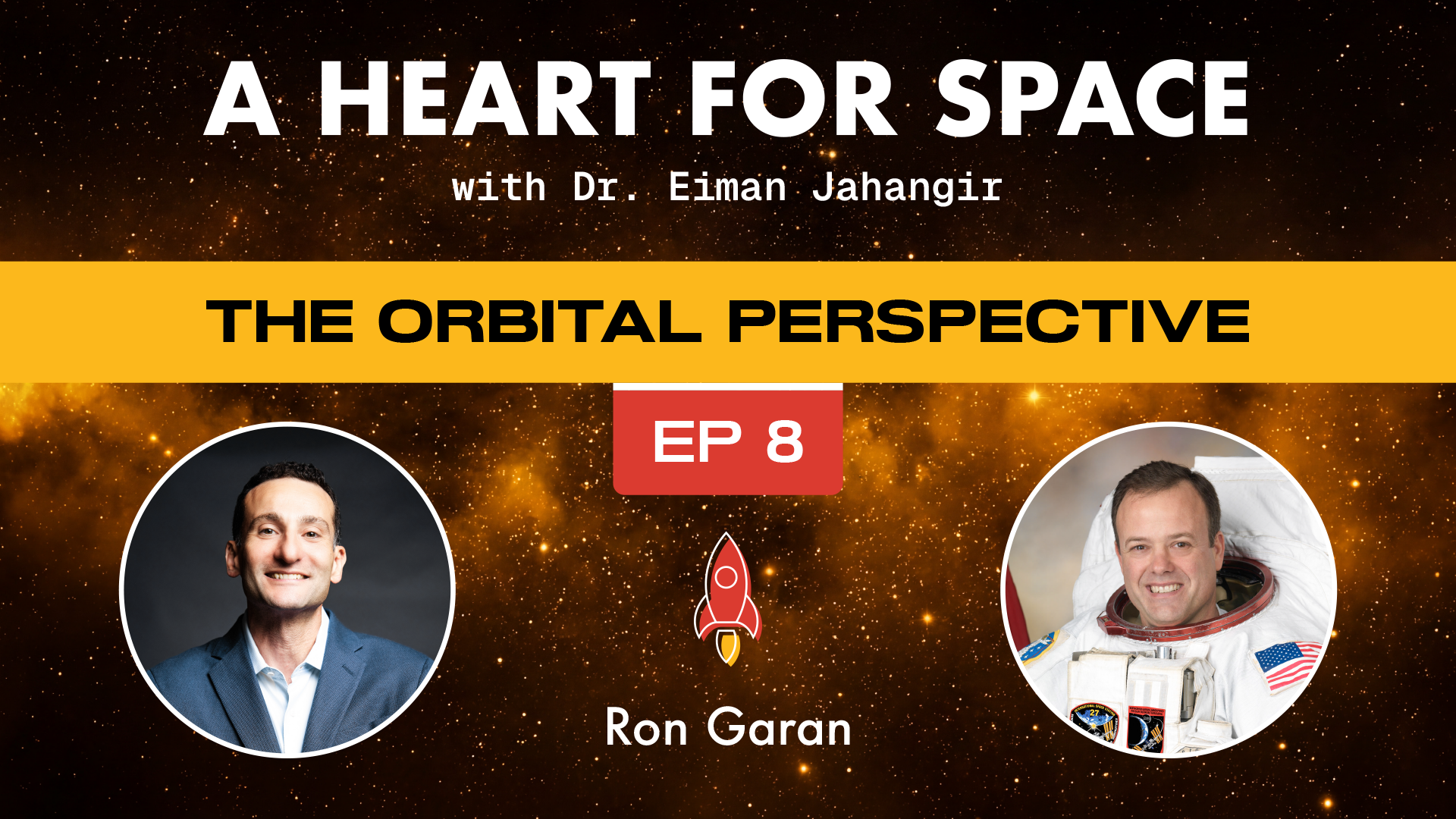
The Orbital Perspective | Ron Garan


Key Takeaways
- Ron Garan's experience looking back at Earth from space inspired his concept of 'The Orbital Perspective,' highlighting our profound interconnectedness and interdependence.
- As a founding member of Astronauts for America, Garan and other former astronauts advocate for constitutional law, rule of law, and evidence-based decision-making.
- The Mana Energy Foundation pioneered innovative ways to fund water purification projects in developing nations through carbon credits to combat waterborne diseases.
- Technology possesses a dual nature, serving as both a powerful tool for global collaboration and a profit-driven mechanism that can foster ideological silos.
- Having a clear mission with well-defined objectives, as demonstrated during Operation Desert Storm, is vital for achieving successful outcomes in complex situations.
As a child watching the Apollo 11 Moon landing from his home in New York, Ron Garan knew he wanted to become an astronaut. That dream eventually led him from flying F-16 combat missions during the Gulf War to spending 178 days in space aboard both the Space Shuttle and Soyuz spacecraft. But it wasn't reaching orbit that changed him most, it was looking back and seeing Earth as one interconnected, fragile home.
In this episode, Dr. Eiman Jahangir welcomes retired NASA astronaut, fighter pilot, author, and social entrepreneur Ron Garan for a conversation about the transformative power of perspective. Ron reflects on the journey that reignited his childhood dream of spaceflight, the unique experience of launching aboard both American and Russian spacecraft, and the profound shift in thinking that inspired his concept of The Orbital Perspective—the belief that humanity's greatest challenges can only be solved by learning to work together on a planetary scale.
Ron and Eiman also explore the lessons of military service and leadership, the future of lunar exploration and commercial spaceflight, the importance of science-based decision-making, as well as Ron's work bringing clean water and renewable energy to underserved communities through social enterprise. From orbit to Earth, this conversation is a compelling reminder that changing the way we see the world may be the first step toward changing the world itself.
Purchase your own copy of Ron’s newest book, Floating in Darkness, at https://go.aheartforspace.com/floatingindarkness
00:00 Welcome to A Heart for Space
02:34 The Dream Reawakens: From Business to Engineering
06:27 Flying F-16s in the Gulf War
11:55 Comparing the Shuttle and Soyuz: Two Paths to Orbit
16:09 Launching with Former Enemies: A Symbol of Cooperation
18:07 The Orbital Perspective: Seeing Earth as One Planet
20:49 Technology: Connecting and Dividing Us
22:52 Astronauts for America: Defending the Constitution
29:14 Bringing Clean Water to the World
33:24 Writing to Inspire: Three Books and a Sci-Fi Novel
40:59 The Future of Space: Moon Bases and Lunar Economy
46:42 The Space Still Worth Reaching For
Discover more about Dr. Eiman Jahangir, and preorder your own copy of A Heart for Space, now at https://aheartforspace.com/
Frequently Asked Questions
Who is Ron Garan?
Ron Garan is a retired NASA astronaut, fighter pilot, author, and social entrepreneur who spent 178 days in space aboard both the Space Shuttle and the Soyuz spacecraft.
What is 'The Orbital Perspective'?
'The Orbital Perspective' is a concept developed by Ron Garan based on his experience seeing Earth from space, emphasizing that humanity's greatest challenges require working together on a planetary scale.
What is Astronauts for America?
Astronauts for America is a nonpartisan organization founded by former NASA astronauts dedicated to promoting constitutional norms, the rule of law, and science-based decision-making.
How did Ron Garan contribute to clean water initiatives?
Through the Mana Energy Foundation, Garan helped pioneer funding for water purification projects in Kenya and Rwanda by generating carbon credits through the UN.
It's the light bulb that comes on that where you realize how not only interconnected but interdependent we are. You see the glowing planet and blackness of space and the fragility is there. And so it's kind of the shift in perception. Welcome to A Heart for Space. I am your host, Dr. Eiman Jahangir. Join me as we uncover what it takes to reach beyond the limits of what we think is possible and turn the biggest dreams into tangible reality. I am very excited today because we have NASA astronaut, former NASA astronaut Ron Garan here with us today. And so thank you very much for joining us, Ron. Well, Eiman, it's my pleasure. Yeah. So the way I start this out typically is ask people how they would describe themselves if you met someone at a party and they didn't know who you were. Can you introduce yourself to us? That's a great question. I would probably start out by saying, hi, my name is Ron. Tell me about yourself. Fair enough. Yeah, that's good. And then I would probably share aspects of my history, life, that I think would resonate with the folks that are aligned with commonalities and things like that. Yeah. Yeah, I guess, where were you, where did you grow up? Where were you, what kind of kid were you? Talking about commonalities. Yeah, I grew up in New York, in Yonkers, New York. What kind of kid was I? I always wanted to be an astronaut since July 20th, 1969. I'm old enough to have... Watch the moon landing. It is my most vivid childhood memory. Amazing. I was kind of a wild child, got in a lot of trouble. I wasn't a great student in high school because I was drifting. I wasn't a great student in college either. And my first – getting my bachelor's degree. Later in life, grad school, I realized I needed to be more serious about school. I grew up in New York in the 70s, which was an interesting place to be in New York. Yeah. So, yeah, that's a little bit about that. Did you know you wanted to fly fighter planes? I mean, you flew F-16s during the Gulf War. Was that always kind of the thought? Like, okay, I'm going to join the military. I'm going to try to get to be a pilot. Yeah. I mean, I had multiple motivations for joining the Air Force. But I think when I was graduating, the reason why I wasn't a good student, I think, is because I had no motivation. And the reason I think I had no motivation is when I was a junior, a senior in high school, it was after the Skylab program had ended and it was before the space shuttle program had started. Yeah. For some kid from New York, it didn't make any sense to want to be an astronaut because we didn't have a space program. And so I went off to college not knowing what I wanted to study. And I studied, ended up studying the most practical thing I could think of, which was business. I got a bachelor's degree in business economics. But when I was in college, my sophomore year of college was, the first shuttle mission, you know, STS-1, Space Shuttle Columbia launched. And that's where the dream reawoken. I'm literally the next day I went into my academic advisor and said, I wanna start taking math and science for all my elective courses. And so I end up graduating with the business economics degree. And then I just, I went downtown in the little town I was in and went to the bank and said, how much will you lend me in a student loan to continue my education to get an engineering degree? And the answer was $5,000. And so I packed up my beat up Fiat Spider with, you know, holes in the floorboard. You could see the road go by. And I drove down to Daytona Beach. with my $5,000 and started an aeronautical engineering undergrad program at Emory Riddle University, Emory Riddle Aeronautical University. And my plan was to stay there until I either ran out of money or I got a pilot slot with the US Air Force. And they both happened at the same time, which was after two semesters. So I did go into the Air Force. I did not complete my engineering degree at Embry-Riddle. But backing up, when I was still in New York going to college, the other thing I did besides going to my academic advisor was to start taking flying lessons. And so I ended up getting my private pilot's license. And I joined the Air Force for two reasons. I wanted to serve my country. Well, three reasons. I wanted to serve my country. I absolutely loved flying. Ironically, the first time I ever flew in an airplane, I was at the control's. I was like 19 years old taking my introductory flight course to see if I would like it. And I was hooked immediately. I fell in love with flying and I wanted to fly. And then the third reason was I had this dream as a child to be an astronaut. And I thought this was a path to become an astronaut. Well, thank you for your service. I take care of veterans at the VA, so I always appreciate, you know. And my father-in-law actually was a civilian in the Air Force for a long time, his whole career. So he was up there in Massachusetts. Now, you probably are the only astronaut that has a business economics degree. I can't imagine that any other person went through the program, even as a mission specialist, that... Yeah, well, I don't think I would have got in with a bachelor's degree, but I do have two master's degree, one in aeronautical science and one in aerospace engineering. And did those happen while in the military? Yes, yes. Both of them happened in the military. I don't advise getting a master's degree in any type of engineering if you have an undergraduate degree in business. It's a very different beast. I, you know, I personally couldn't be an engineer, which is why I'm a physician, but I love seeing the engineers when they show up because they're the guys or the, or the ladies who have like detailed sheets with all of their blood pressures, heart rates, everything graphed out. So bringing the data, bringing the data. Now you flew in the Gulf war, uh, I guess what's the word, not tour, but when we had the Gulf War, which I was young when that happened. But what was it like to sit in the cockpit when the stakes were quite real? I mean, it wasn't like you were just flying flyover missions. And did that experience shape everything that kind of came afterwards? It shaped a lot. It was an incredibly powerful experience. And, you know, I did take a lot from it. I was my unit's weapons officer, which what that means is I'm responsible for the weapons. developing the tactics that we use, ensuring that the squadron or the wing is ready to do those tactics, coordinating with all the other units, planning huge missions. The first week of the war, we were doing 100-plus aircraft missions. missions, dissimilar aircraft. So, you know, F-15s, F-16s, F-111s, F-4Gs, EF-111s, obviously tankers, you know, coordinating all that. So that was my job. So there was a lot. So I was one of the few people on the base that was read into this top secret plan known as Desert Storm. Yeah, I've heard of that one. Yeah, we were in Operation Desert Shield at the time, which was what it was called before the war started. We were the first unit capable of rolling back any incursion of the Iraqis into Saudi Arabia. If you remember, they rode through Kuwait, they took over Kuwait, and then they parked on the Saudi border. And there was a lot of fear, a lot of concern that they would continue south into Saudi Arabia. So we got there, took off out of South Carolina, took off. Early August of 1990 with 24 F-16s fully loaded, fully armed, and flew 17-plus hours to the Middle East and started sending close air support. So we were the unit that was going to take out the tanks as they crossed the border. And so fast forward seven months, six or seven months. Yeah. I remember my wing commander called me into his office and he basically just said, Ron, Desert Storm has been executed. Go get some sleep because I knew in about seven hours I was going to be strapping on an F-16 and heading deep inside Iraq for the first daylight raid of the entire war into the most heavily defended target area in the history of aerial warfare. And all the tactics were on me, my responsibility. No pressure. Yeah, no pressure. I mean, that went well. I think anyone who lived that time saw that that was a very effective, I mean, I hate to call it a war, but it was a war. But considering everything that came afterwards, I think it's pretty incredible what you guys did at that time versus, you know, when we had to go back and it was much more involved front at that point the second time we went back. Yeah, and I think this is a good lesson learned, too, because the reason why it was so – there's a number of reasons why it was so successful. One is we exhausted every possible way to avoid combat. We – you know, for seven months of diplomacy, seven months of coalition building, seven months of, you know, trying to resolve the situation peacefully, while that time was happening, we were also preparing – for the inevitable, you know, just in case we had to resolve this through conflict, you know, there were very, very clear objectives. The objectives were to give Kuwait back to its rightful people and to overturn the invasion of Kuwait. And there was – once we did that and it was clear, there was a lot of pressure to keep rolling, to keep rolling into Baghdad and to basically – do regime building or, you know, country building into, or regime change, country building. And President Bush said, no, we set out these objectives. We coordinate this with our international partners. And it was a huge international coalition. We achieved the objectives. And we stated once we did, we would stop and we stopped. And it was a very clean process. You know, as you pointed out, we haven't followed that example too much, especially in the recent past. Things got complicated, as they say. I mean, I remember Desert Storm because I was in, it was 1990, 91. So I was in like sixth grade, fifth grade, sixth grade. And I remember it coming through. And I mean, I'm Iranian, right? So I grew up in Iran, but I'd never really seen us, the United States, the United States. That was kind of the first incursion in my lifetime. So it was interesting to see and kind of being able to process it as a young child. But, yeah, I mean, it's hard. These things are messy. And I think what you said is it goes back to what the president did. The point is they had clear objectives. They completed the objectives, and they said we're out, which I think we can all respect that. And they had congressional approval. And they had congressional approval, yes. And we don't have to get into all that because I do want to talk about space, to it near the end, but you spent 178 days in space. So you got in finally through the military, I assume, right? You went through the air force selection committee and you ended up flying twice. Uh, a ton of orbits, thousands of orbits, aboard both the shuttle and the Soyuz. Is that right? You flew on both, which is pretty cool. What was your experience, one of the different, flying the shuttle, which, you know, was more pilot-driven versus the Soyuz, and then also just your experience from seeing the Earth from orbit? Yeah. Which I know you've described. I actually talked about you in a talk I gave at the Biosphere maybe a month ago. I used your quote about seeing the Earth from space. Cool. Yeah. Yeah. All right. So let me start with the last question first. Well, let me introduce the last question and then, which is, you know, my impression of seeing the planet from, from space. And I've written three books now about to publish a fourth book. that attempt to share, to share, to share that experience. Um, so, uh, I'll, I'll get back to that, get back to that in a second, but the Soyuz versus a shuttle, um, two really, really amazing, uh, vehicles, um, I'll talk about the launch because I think that's where the biggest, well, I'll talk about the launch and the Rancher because they're both really different. On the launch, the shuttle launch, it was my first launch. You know, I didn't know 100% what to expect. I had been training for eight years at that point for the launch. to be able to fly the shuttle in space. I had a lot of responsibilities on board. And so, and it's this big, massive vehicle. There's a lot of vibration. You know, when you lift off the pad, when you see it on TV, it's just, you know, white billowing smoke. And then the shuttle just kind of lumbers out of the top of the smoke. It doesn't feel like, it feels like you've been released from a slingshot. I mean, you just jump off the launch pad and you, you're going somewhere and you're going somewhere fast. And when we finally got to orbit after eight and a half minutes, it was, it was a big relief because, you know, we had made it and, and, you know, all the things that I had to keep track of, you know, It's an automatic process unless something goes wrong. And then you got to react fast. And we didn't have anything really go wrong and we didn't have to take control. And so that was all behind us. So it was a big relief. Fast forward around three years and I'm on the Soyuz. It was my second flight. I pretty much knew what to expect. I didn't have hardly any responsibilities at all other than look out the window, which wasn't a responsibility. It was a privilege. And it's a very, very small vehicle. It's so small and you're in there so cramped. It's like three guys in the trunk of a car and it feels like you're wearing the rocket. And all I remember about that was that it was extremely fun i do i was just having fun um and i didn't expect to have fun because i didn't really have fun on my shuttle launch i wouldn't call that fun well scott kelly says he never looked out the window when he was flying the shuttle because he had he had to focus on the task at hand right so it's like yeah yeah he looked out the window don't yeah But, yeah, you can look out the window. If you're in the right seat of the Soyuz, which I was, and Scott was in the right seat of the Soyuz as well, I think, you can look out the window. You can look out from either. But the shuttle, he was saying the shuttle because, you know, if you're piloting the shuttle, like you said, you're focused because if something goes wrong, you're the person. Well, I'm sure he looked out the window when he landed the shuttle. I can guarantee you. Yeah, yeah. But, yeah, it feels like you're wearing the rocket. And I remember laughing at one point. Because you remember the movie Apollo 13 where there's, when they launched the space, there's a scene where they do staging and all three of them, you know, come forward like this into the control panel. And then the engines kick and they go flying back into it. That's exactly what happened. I mean, all three of us right into the control panel. Control engines fire. We get smashed back into our seat. And it was, it was a lot of fun. And we launched from the same launch pair that you're Gagarin launched from on the 50th anniversary of his, of his flight. And I remember that, Being at the base of the rocket. And you have to realize that I spent the first 15 years of my adult life training to fight the Russians. Yeah. I was a Cold War fighter pilot stationed on the tip of the sword in the former West Germany before the fall of the Berlin Wall. And, you know, they were our enemy. And it was just... bizarre to be at this previously top secret Soviet military installation, getting ready to launch into space as a fully integrated member of a Russian spacecraft crew with a couple of Russian military officers on a spacecraft called Gagarin. And I looked up at the rocket and I saw an American flag and a Russian flag side by side. And that was really an example of what we could do if we set aside fear and work together to do something incredible, like build an International Space Station. And so I remember when we lifted off my Soyuz commander, Sasha Samokoteev, who unfortunately just passed away last week. I saw that. I'm sorry. Yeah. Great guy. I posted a video of an interview I did with him while on orbit. But, you know, he, you know, made this speech in the words of, you know, obviously in Russian, in the words of Yuri Gagarin, Payeri, which means we're off, you know. And in the background, you could hear, woohoo. because I involuntarily let out a woohoo. That's amazing. Yeah, here's a veteran astronaut still finding the joy. Yeah, and both my Russian crewmates were on their first space flight. That's cool. I remember the head of the Russian space program, space agency, kind of pulled me aside and said, you're the adult supervision on this flight. But I didn't, there wasn't any need for it. They both, Andre and Sasha, did incredibly well, especially, regardless, I mean, even if it wasn't their first flight, they did incredibly well. And it sounds like even just sitting on that rocket, even before you got space to space, you had this idea of this orbital perspective you've described, which is like that we should be working together. We are one people. Right. Exactly. Yeah. So I launched into space with a belief that we already right now have all the technology, all the resources necessary to solve many, if not all problems facing our planet. And, you know, I often think, you know, if that's true, you know, why does so many problems still remain? And I think the answer is because we have not to date learned how to effectively work together on a planetary scale. And I didn't say global scale because we don't live on a globe, we live on a planet. And And that's another issue is that we treat things as being global, which is artificial. If we treat things as planetary, then we bring the biosphere into the equation. But we tend not to do that because we tend to treat everything, including the very life support systems of our planet, as the wholly owned subsidiary of the global economy, which means we're living a lie. I mean, we're living what I call the golden lie. where we think it's economy, society, planet, when in reality, it's planet, society, economy. You can't have an economy without a vibrant society. You can't have a society at all without a planet. How long do you think humans have been doing that? Do you think this is like... we've been doing it for thousands of years or really like industrialization or is it globalization? Is it when we started building ships and really going like, where did, I mean, and you're a economist too, right? Business economist. I love that economy plays a factor into this because this is, I mean, this is part of all of it, right? What drives humans? Um, I mean, do you have an idea of like where you think we pivoted or is this just who we've been? Yeah, there's two big pivots, I think. The first pivot was when we as humans got this idea in our head that we were separate from the world, that we were, you know, plucked out of it. And you have the world and you have us and we're different. And we're not. We are the world, right? And as that famous song said, Yeah. But I mean, I mean, in a literal sense. I mean, in a romantic sense. I mean, and the other big pivot is you take that mindset of separation that you're separate from the earth. And then you bring in the acceleration that industrialization can do. And that that really, that really brings it in. And there's other there's other factors, you know, that that but those are the two big ones. Do you think our modern connectivity, because even when I was growing up, right, if you wanted to call family in Iran, you'd get a landline, it'd cost an arm and a leg. Do you think our modern connectivity accelerates our kind of removal from the earth? Or do you think we're, by becoming more global in that sense, we are, maybe we... reconfigure who we are, you know, and this idea of like an orbital perspective and that we should be all working together. Do you think we're making it easier or harder in the modern sense? I think it does both simultaneously. It's never in history has it been easier to incorporate the ideas and the efforts and the creativity of people from all around the world regardless of their geographic location or their political ideologies or any other factor, and bring them together and collaborate towards solving our shared problems. Never before in history has it been easier. But the other part of the equation is, or the other side of the coin, is that these same systems that connect us and allow us to collaborate build silos around each other because what they inherently do and it's profit driven is they inherently put us in silos that separate us ideologically from each other. Not technically, we're not technically, or technology separated from each other, we're ideologically separated from each other. And that is a very, very dangerous turn because the technology that brought us together and made the world smaller and made us see that we're not much different from each other regardless of who we are, that same technology then said, okay, but we can make a lot of money if we erect these false – These false divisions and basically bring fear in and to and to train the algorithms to induce fear in the in the viewers and focus on on this spiral of continuing escalation of the of the perceived differences that we have. Yeah. And I mean, we've seen this in American politics, I think, in the last 10, 15 years. We're coming on the 250th anniversary of this great country. And I guess it'd be a good time to talk to you about Astronauts for America, which I know you are participatory in, founding in, you're a founding member. So, and you've talked about this some, but like, what, led you all to decide to do this? Because, I mean, astronauts are traditionally, you know, your public figures, even when you are retired astronauts, you're seen as someone that everyone holds you all to a high value, high kind of esteem. And so what made you all decide to participate in politics to some extent? Yeah. First and foremost, we all swore, regardless if we came from the military or civilians, we all swore an oath to defend and protect the Constitution of the United States. And over the last decades, this isn't a new thing. Over a period of decades, there's been a steady erosion of constitutional rights, of constitutional norms, of rule of law, of separation of powers, of law. evidence science-based decision-making. But although that's been occurring for decades and that erosion has been happening for decades, it has recently accelerated considerably to the point that we're in a very, very dangerous trajectory. And so over 100 former NASA astronauts have come together. We launched Astronauts for America to promote constitutional law, rule of law, separation of powers, and adherence to evidence-based, science-based decision-making. And it's a completely nonpartisan organization. As a matter of fact, we have two co-chairs. One's Republican. One's Democrat. And the only reason we know that is because it's a good talking point, because we don't talk about politics. It's irrelevant. That's not what we're that's not where we're on a mission. We're and most of our missions are very dangerous. We're on a mission to accomplish something. And. The mission takes priority. And so our slogan is our country is the mission. And so one of the many things that we bring is that mission mindset, that our mission is the country. We're not on a good trajectory right now. So in space terms, we need to make a course correction to put us back on a good trajectory. So what is the course correction? The course correction is our founding fathers knew what they were doing, and they established the Constitution. made amendments to the Constitution to basically make sure that we can preserve this nation for another 250 years. And so we need to make sure that we adhere to the Constitution. And by the way, most of the Constitution applies to everyone, not just citizens of the country. And – separation of powers is designed into, balance of power is designed in. We have a big mismatch in the power right now. And frankly, Congress is very, very ineffective right now. And so that's an issue. Our country is built on science, on all of our technology, everything that makes us a great nation is built on the scientific advancements. And so... We see a huge move away from that. And science has been politicized extensively. And again, this is a nonpartisan thing. Yeah, totally. We've seen the issues on both sides of the political spectrum. Yeah. And so the other thing is when we see something wrong as astronauts, if something goes wrong, we do a very, very thorough root cause analysis of what the problem is. And then we have a course correction. We have a plan, a very detailed and hopefully effective plan to get us back on track and to fix the problems. And so and we set aside our differences. Well, I shouldn't say that. We don't set aside our differences. We bring our differences with us. We set aside fear. And ego to an extent. And ego and I made a mistake. Yeah, it needs to be brought up. Exactly. So that's what we're trying to do. So are you guys spending time lobbying? Is this more messaging, talking to citizens, talking to politicians? How are you guys? Yeah, so we're in the process of publishing a number of papers that talk about different issues that we are saying. One is – and they're in different flavors. One is, you know, we've got a problem, you know – Houston, we have a problem. Yeah, that's, you know, root cause analysis. And so these papers are basically our position on certain issues. We are going to be doing a lot to help get the vote out because – One of our major tenants of the organization is democracy is not a spectator sport. And we need everybody involved. And again, that's nonpartisan. We just want to get as many people. Yeah, just go be heard. Yeah. Makes sense. And we are doing a major event on July 20th at the California Science Center. which is basically a get out there, a voter event. And we're going to announce, so I'll announce it now, that we're going to hopefully do a major university tour where we're going to travel around. And the objective of that tour is, again, to get the vote out, but also to inspire folks in college and college-age folks that they can make a difference, that they can affect the future of not only their lives, but the country and the world. And to really instill in them that, you know, help them realize how much power they actually have to affect real change. Well, if you come to Tennessee, let me know. I'll come out and support you guys. My cousin ran for Congress last cycle. So I've seen it. You know, here we are. I'm an immigrant. She was born in the U.S., but seeing someone actually do it. And it is it's definitely not a spectator sport. We need everyone involved. So thank you all for doing that. I think it's a great. I think it's needed. You guys are out there talking. Yeah, I got a patch behind me. I don't know if you see that. Oh, that's awesome. Yeah, I saw this online. Yeah, fantastic. Did you design it or did you guys get to design it? We all did. We all designed it together. That's fantastic. Now, I know you also, you have the engineering background. You founded this company called Mana Energy Foundation to help bring clean water to millions of people, particularly in Kenya and Rwanda. Yeah. What made you decide to take that up, you know, after leaving the Space Force, not Space Force, but NASA, the Space Corps? Actually, I launched the Meta Energy Foundation and then later some spinoff social enterprises that came out of that back in 2005. So, and I flew for the first time in 2008. I left out. Yeah, so while you were doing it. Yeah, this is while I was an active NASA astronaut. And it all stems from a book that I read called High Frontier by Gerard O'Neill. And it was written in the 70s, and it basically predicted what the world would be like in the year 2000. And he got a lot of stuff right. He got some stuff wrong. He said by the year 2000, we'd have 30,000 people living in space. But if you look at the trajectory of Apollo, you would think, yeah, that makes sense. If you look at the trajectory of Apollo, I don't know if you've seen the show For All Mankind, but that's the trajectory we're on. Yeah. where we already have, you know, probably 30,000 people living on Mars by this time. But anyway, one of the things he said was there's this many people on the planet in 1970, whatever. That population, this percentage of them gets electricity. Of the ones that do get electricity, this percentage comes from fossil fuel base. If... By the year 2000, here's the population projected for the year 2000. If the same percentage of people have electricity and the same percentage of people are using, you know, coal and, you know, fossil fuel based things, we will destroy the planet. And... So the Manor Energy Foundation was initially born to promote renewable energy, the transition to renewable energy. But then we saw the connection between the provision of electricity and the alleviation of poverty and poverty. The primary need there, especially in the communities that we served in Rwanda and Kenya, were waterborne diseases that were killing thousands and thousands, mostly children, every year. And so our main innovation, although we did have innovations in water purification technology, our main innovation was in how we funded them. So we were the first organization to fund water projects in the developing world. through the generation of carbon credits. We're the first organization to earn a carbon credit through the purification of water. And we wrote the methodology that the UN uses to do that today. But it then evolved to become a social enterprise incubator. And we started incubating all these social enterprises. The first was Man Energy Limited, which actually executed the water projects in the world. But it has since been acquired, and I'm not involved with that anymore. I mean, it is incredible. And I think, you know, as a physician and I've done global health, I was used to teach the global health course here for our third and fourth year medical students. But like, people don't realize how much waterborne illnesses still impacts people throughout the world. We're very lucky in the United States because we don't really think about it. But epidemiologically, it's still such a big Big problem. And then that doesn't even go. That's right. And that doesn't even touch on like access to water, which is not even just like access to clean water, but people's access to water and how some communities still are traveling far to get the water they need to survive. It's interesting in my first book called The Orbital Perspective, I have a whole chapter called Arrested Development, which talks about the pitfalls of development and the short-term thinking you know, the competition that exists with organizations trying to, you know, get limited funding from the same sources. And, and it's, uh, it was, it was eyeopening when I got into that. Yeah. Well, and I mean, I feel it sounds like you both read a lot and you write a lot, um, which is very cool to see. I don't know if, you know, if that was always a passion of yours, but as you said, you've written three books to date and you're writing a fourth book that's coming out now. Um, These are very different books for different audiences. What was each one trying to do that the others couldn't? What led you to writing three, I guess, and then now you're writing a fictional novel? So the first book, The Oral Perspective, is a book that's designed to... basically bring out the disconnect that we had talked about before, that the reason we still have faced so many critical issues and challenges is because we have not learned how to cooperate and collaborate on a planetary scale. And the example of being able to overcome you know, fear and to work together to do something bold is the International Space Station. And so there's a lot of history of the space station. One of the main tenets of the orbital perspective is that you don't have to be in orbit to have the orbital perspective. And so I showcase a lot of stories of folks who exhibit what I call the orbital perspective that have never been to space. And so there's the overview effect and there's the orbital perspective. And I actually wrote the foreword to Frank White's fourth edition of his book, The Overview Effect. And I compared and contrasted The Overview Effect with The Oral Perspective. And so The Overview Effect, and Frank White wrote this book in the 80s. Yeah, early 80s, yeah. It's been revised a number of times. But it basically showcases the shift. An awareness that some astronauts talk about after returning from space. It's the light bulb that comes on that where you realize how not only interconnected but interdependent we are. You see the glowing planet and blackness of space and the fragility is there. And so it's kind of the shift. and perception. So if that's what the overview effect is, the orbital perspective is what you do with it. The orbital perspective is the call to action that comes from the overview effect. It's a refusal to accept the status quo on our planet. It's a feeling of injustice that it doesn't have to be this way. It's a sobering contradiction between the beauty of our planet and the unfortunate realities of life on our planet for a significant number of its inhabitants. So that's the overall perspective. Floating in Darkness is my attempt. And in my opinion, I'm not really objective. But in my opinion, I succeeded in telling the story I wanted to tell. And the story I wanted to tell was to use an autobiographical narrative that, to serve as an allegory for the evolution of society. Not only where we've been, but where we're going and what we are. And so I used, I mean, I sat nuclear alert in West Germany. I fought in war. I lived on the bottom of the ocean. I flew in space. You know, I have all these examples in my life of potentially different phases of evolution, of societal evolution. And I wanted to make that connection. And that was a very, very enjoyable book to write. It was very rewarding to me. My first stab at fiction is a children's book called Railroad to the Moon. Not a little girl that goes to the moon. And that was that was just my objective there was to inspire children, especially young girls, because traditionally, you know, space, it's changed a lot now. But traditionally, historically, it's been a mostly male endeavor to inspire children. aspire to do big, bold things and to accomplish things. And then the book I'm writing now is called Infinite Simplicity. It's book one of a four-book series. It's a science fiction novel that is a deeply, deeply philosophical novel somewhat spiritual book packaged as a sci-fi novel. And it's, it's a cautionary tale about how civilizations fell. And basically the premise is that all civilizations throughout the galaxy or the universe reached an inflection point where their conflicts, their internal conflicts start to exceed their ability to, to constrain them. And they either, um, pass through and get to the other side and thrive. And, you know, they have a future that we'd all want to be a part of, or they collapse. And so it's basically, and it's purposely written in, terms and in vocabulary that we can understand from this point in history right now that we're on right now, that we're in right now. But it's a science fiction novel and there's a lot of plot twists. And this has been very enjoyable writing this as well. One, I'd say I'm going to plug it for you. For anyone who's interested, he's releasing chapters on Substack. I think you just released Chapter 6. Yep. So check it out. I mean, because it is great. It's kind of fun to read as it's coming out because it's not like, oh, here's a 1,000-page book. How am I going to get through this? You just pick it up when the new chapter comes out. And, I mean, the imagery is really – I mean, I've read the chapters out. The imagery in this book, I feel like, is – it's very vivid. I mean, that first chapter, you have fires crossing borders, cities have gone dark. I mean, it's almost like you're, you're visually telling us and showing us the fractures that are being seen by the characters in space. Why did you decide to, to, I guess. Yeah. I mean, it's kind of, it's not, it's kind of an end of days book to an extent without giving too much away, at least the parts I've read. Well, there's 21 chapters. There's only six. That's what I'm saying. Yeah. I'm only early on, but like why? You started where the stakes were really high. And I guess why did you decide that that's why? Was that just to throw us into it and get our buy-in? Spoiler alert. The stakes get higher every chapter. So, yeah. I mean – so why the, the stakes are life and death. Um, but, but what, what ends up happening is, is, So the premise of the story is that there's a massive asteroid heading towards the planet and two astronauts are on a mission to deflect it and save the world. But what they come to realize is that there's a more important mission. So because even if they do deflect it, that might not save the planet. There's something bigger at stake here that they have to – that they have to help resolve. And so it's not always the thing right in front of us. That's the big thing. Yeah, and I like the two characters are a good juxtaposition, I think, of personalities and thoughts. So, I mean, it's very well written. So I look forward to seeing all the chapters in the four books. And then maybe the movie, you know? I always like sci-fi. When sci-fi books eventually become movies, I think it's fun. Well, I'm purposely trying to write it cinematically. Cinematography. Yeah. Cinematically, yeah. I think that you talked about how, like, if you had looked at the Apollo era and things were just, like, moving forward, I think we're at another inflection point like that when we talk about space. Yeah. Where do you see kind of both public and, you know, government and private space companies are now? And kind of like, what do you see as the future of our spaceflight going forward? Like, where are we? Where are we going to go with the space programs? Yeah, I think the public-private partnership that we've seen evolve over the last couple of decades, the last 20 years, is going to continue. I think it's really proven itself out. I think that we are on a path to put boots back on the moon, footprints back on the moon, this time to stay. So it's not going to be about, you know, flags and footprints. It's going to be about creating a permanent human presence on the moon for the benefit of all. Yeah. That's my goal. There's also, you know, potential military applications that could complicate things. I mean, the moon is the ultimate high ground at the moment. And so that's something that we need to navigate. But there's tremendous benefit on the moon. There's energy on the moon. There's resources on the moon. There's science on the moon. There's... you know, understanding of the geological processes of our planet that can be derived from the moon and the list goes on and on. And so I think we're on a really good path to achieve that. I think what's going to be critical in achieving that is creating a sustainable lunar economy to have a commercial market. Because if we just are doing government type of missions, we can accomplish great things, but it's going to be a very linear approach. form of progress. If we can start those commercial markets, it'll take off exponentially, and we will actually get the economies of scale that we need. And do you think, I guess, what do you foresee some of those commercial markets being? I mean, when they talk about microgravity, you know, there's pharmaceuticals, things like that. Everyone's talking about data centers in space, whether or not you think that's a good idea, but on what would be the benefit of that lunar economy versus on Earth because there is gravity. There's less gravity, but. Yeah. So one of the big ones is helium-3. Yeah. We don't have any fusion reactors at this point. And you could argue that part of the reason we don't is because we don't have a lot of helium-3 on the planet. So helium-3 is very rare on the Earth. It's plentiful on the moon. I forget the number. I want to say it's worth about $5 to $10 million a kilogram. And so there's also, as you probably know, you know, a lot of medical analysis applications for helium-3, medical imaging. There's rare earth minerals and materials on the moon, which is a misnomer since they're rare earth, but they're on the moon. Materials that on Earth are called rare Earth materials that are, you know, can be very valuable. There's energy production. You know, we're going to have solar farms on the moon. There's water on the moon, which means there's, you know, you can break that down. Oxygen and hydrogen, which is rocket fuel. Yeah. You mentioned data centers. That's something that's an interesting possibility. There's a lot of industry that you can move off the planet because of the environmental degradation that they cause on the planet that they wouldn't be affecting on the moon. Again, the list goes on. I like it. I like this future. Yeah. We just need the heavy lifts to get us there. So hopefully SpaceX and Blue Origin will deliver on that. in due time. Well, I have a couple more questions as we're kind of rounding out. I guess the first one is who in your life first showed you that it was possible to see the world in a bigger way. Wow. Who is that person? Probably. If you have one. Well, probably my mom. yeah. Um, um, She was always encouraging me to think big. But I mean, maybe I'll say John Young because John Young commanded Apollo, he commanded a couple of Apollo missions, but I'm speaking specifically of STS-1. Bob Crippen and John Young, when they launched into space, and it's ironic that I later became friends with John, good friends with John Young. He was one of my childhood heroes. But yeah, that first shuttle mission kind of changed the trajectory of my life and definitely made me think a lot bigger than I was thinking at the time. I will say it's pretty incredible – Because when I was applying for the NASA ASCAM group, it was as the shuttle was retiring. So, you know, in 2008, when I first showed up, it was like, well, this is going to be gone. You're going to be flying with the Soyuz. And the United States didn't actually have a way to launch our people up. That's right. And so there was a lull, right? There was this, like, 10-plus year lull of waiting to see what happens. And then when Crew Dragon went up with Demo One, I think... we all got very excited because here we are again. We have, I think that was like the next reawakening, kind of like your shuttle one, that must have gotten a lot of people motivated. And then to see kind of, more applications and more abilities and to see like the launch cadence and the ability of sending humans from at least the United States improve is probably revitalizing a lot of excitement for people. I know for me, I mean, it obviously gave me the chance to go on a suborbital flight, which I would have never had. Yeah, yeah. And congrats on that. Well, thank you. It's an exciting time, I think, to be alive if you love space. Yeah, it is. I agree. Well, last question. Okay, so this is called A Heart for Space. And so we ask everyone, what's the space inside yourself or outside that you're still reaching for? Wow, that's a good question. That place that doesn't know the difference between the two. I like that. Yeah. I like it. So I think I'm going to have to say, I always called Frank White a space philosopher, but I think talking to you that there is, you know, your perspective of it, and this is probably very similar to Frank's, and that you've taken the time to think about all of the experiences that you've had. But I really appreciate you taking the time, Ron, and coming on the show today. And I look forward to both reading your book, seeing what you guys do with Astronauts for America and just supporting you all in any way I can. Thanks. I really appreciate that. I really enjoyed the conversation. Thank you. Thanks, Eamon. Thank you for listening to A Heart for Space. If you enjoyed this conversation, be sure to follow the show so you never miss an episode and consider leaving us a review to let us know your thoughts. For more on my work in the pursuit of ambitious goals, visit aheartforspace.com and look out for my upcoming book, A Heart for Space. Until next time, I'm Dr. Eiman Jahangir. And remember, sometimes the only obstacle to achieving an impossible dream is the courage to keep going.