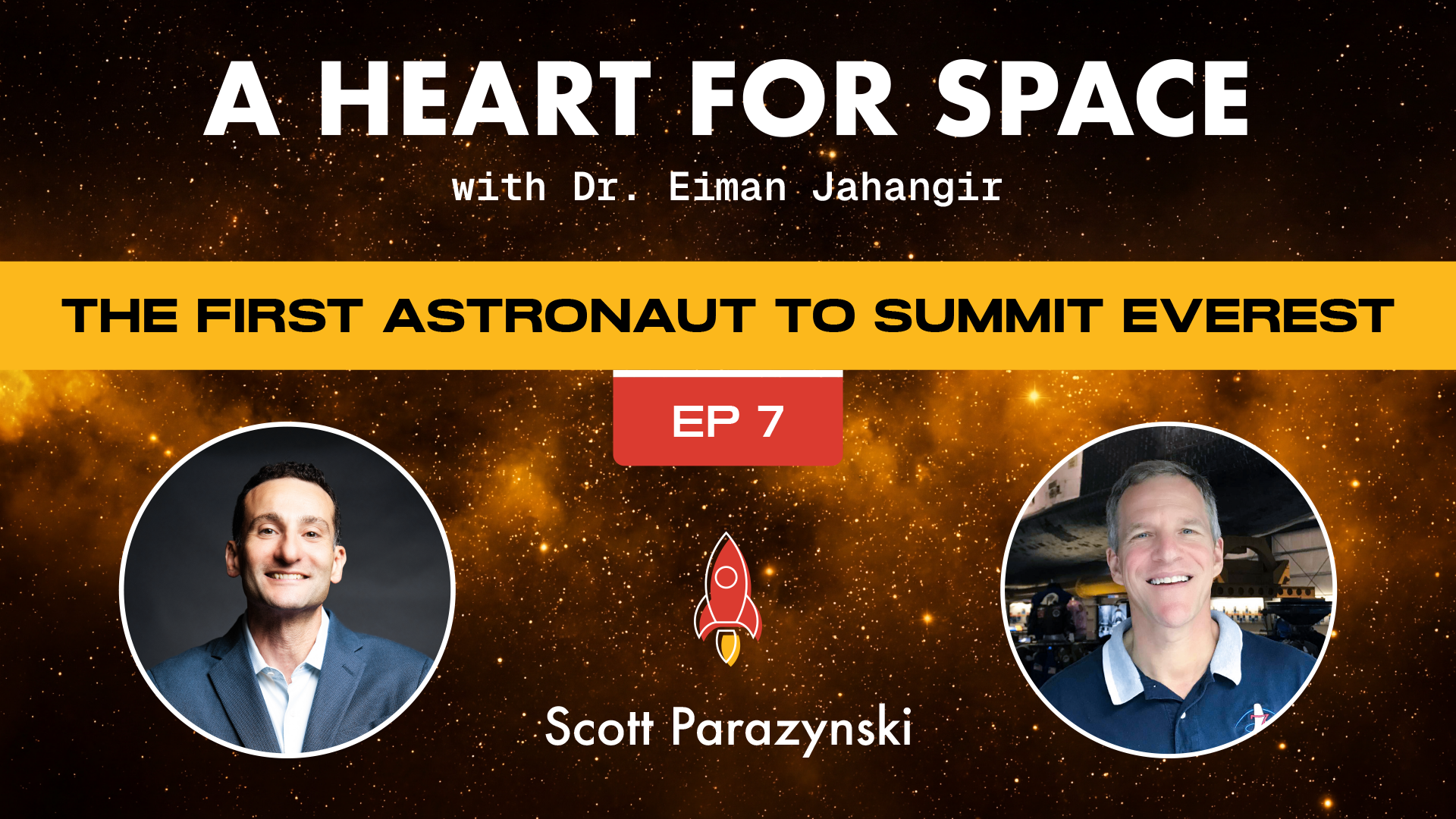
The First Astronaut to Summit Everest | Scott Parazynski


Key Takeaways
- Scott Parazynski emphasizes that remaining open to unexpected opportunities is essential, as even setbacks like being pulled from a mission can lead to greater professional breakthroughs and personal fulfillment.
- A background in emergency medicine provides unique, real-world problem-solving skills that are invaluable for the extreme, high-stakes environments of space flight and mountaineering.
- True leadership in exploration often involves the courage to admit when a plan isn't working and the willingness to pivot, whether that means aborting a space walk or waiting a year to summit Everest safely.
- Curiosity and a willingness to step outside one's comfort zone, fostered by diverse experiences in childhood, are the foundational traits that drive extraordinary career achievements.
- The intersection of passion and resilience often leads to serendipitous moments, as demonstrated by how Parazynski's mission to take a moon rock to Everest led him to meet his wife.
At age eight, Scott watched Apollo 9 launch from the surf off Cocoa Beach—and his course was set. Decades later, he would become the only person to have both flown in space and summited Mount Everest.
In this episode, Dr. Eiman Jahangir sits down with Scott Parazynski—physician, retired NASA astronaut, and CEO of OnwardAir—for a conversation that spans five space missions, seven spacewalks, and two of the most demanding summits a human being can attempt. Scott opens up about the phone call that changed everything: being asked to fly alongside an American legend, and what it meant to become that person's crewmate, physician, and eventual friend. He goes on to share the story behind a dangerous repair mission, and what it felt like to be farther from the safety of the airlock than any astronaut before him, working on a live solar panel that could have ended everything.
As the conversation continues, Scott also gets candid about the moment his dream was ripped away, pulled from a mission just months before launch, and how that setback led to a $45 million fix, a second chance, and a piece of the moon that ended up on the summit of Everest. That same rock led to something Scott never saw coming: meeting the woman who'd become his wife.
Scott and Eiman go on to talk about the razor's edge between ambition and risk, why he chose emergency medicine as the ultimate training ground for space, the astronaut he quietly helped launch into his own career, and what still keeps him up at night solving problems, decades into a career most people would call complete.
Order your own copy of Scott’s book, The Sky Below, at https://go.aheartforspace.com/theskybelow
00:00 Welcome to A Heart for Space
00:30 Meeting Scott Parazynski: Physician, Astronaut, and Explorer
02:34 Growing Up Abroad: From Tehran to Athens
06:54 A Childhood Shaped by Apollo: Watching the Launch at Age Eight
08:29 Taking Risks and Saying Yes: From Luge to Medical School
12:31 Choosing Between Two Callings: Medicine and Spaceflight
14:51 Mentoring Johnny Kim: Recognizing a Future Astronaut
19:11 Flying with a Legend: John Glenn's Return to Space
21:24 Too Tall for Soyuz: A Setback That Led to New Opportunities
24:53 The Most Dangerous Spacewalk: Repairing a Live Solar Array
29:13 Everest: The Dream, the Injury, and the Summit
32:21 How a Moon Rock Led to Love: Meeting His Wife
34:11 Comparing Extremes: Space vs. Everest
36:19 Into the Volcano: Descending into Masaya's Lava Lake
40:47 The Challenger Legacy: Honoring Loss Through Education
44:17 Staying Curious and Taking the First Step
47:14 Life Lessons from Jenna: The Power of Positivity
49:10 The Space Still Worth Reaching For: Innovation and Problem Solving
Discover more about Dr. Eiman Jahangir, and preorder your own copy of A Heart for Space, now at https://aheartforspace.com/
Frequently Asked Questions
Is Scott Parazynski the only person to have been to space and climbed Mount Everest?
No, to date there have been 5 individuals who have flown to space and summited Everest. Scott was the first, summiting Everest on May 20, 2009.
Why did Scott Parazynski choose emergency medicine as a specialty?
He chose emergency medicine because he believed it served as the best preparation for the diverse skill sets required of a space physician, rather than focusing on a singular clinical specialty.
How did Scott Parazynski mentor astronaut Johnny Kim?
Parazynski recognized Johnny Kim's exceptional drive and focus, introducing him to the NASA community and encouraging him to pursue a career as an astronaut after his service as a Navy SEAL and medical doctor.
What is the story behind the moon rock Scott Parazynski took to Everest?
Parazynski received official permission from NASA to carry an Apollo 11 lunar sample to the summit of Everest as a tribute to Neil Armstrong and Sir Edmund Hillary, which ultimately helped him connect with the woman who would become his wife.
I was floored when the chief of the astronaut office pulled me into his office and asked me if I wanted to go fly with my boyhood here. Are you kidding? It took less than a millisecond to blurt out, of course. Welcome to A Heart for Space. I am your host, Dr. Eiman Jahangir. Join me as we uncover what it takes to reach beyond the limits of what we think is possible and turn the biggest dreams into tangible reality. I am very excited to have you on with us today, Scott. I was fortunate to meet you during Siam Proctor's launch, but it followed your career. well before that, both from being a physician and an astronaut. So I can relate to all of that. So thank you so much for being here today. I truly appreciate it. Great to be with you, Dom. I'm excited for our conversation today. Yeah. And we have a lot of overlaps, which I didn't even know until I read your book, and I'm just going to plug it in here. It is a fantastic book, and I love the title, The Sky Below, because I never thought of it that way, but it's very true if you're in space. But, you know, we both lived in Tehran, Iran during a tumultuous time. We're both physicians. We both dreamed of becoming an astronaut, and you made it through NASA, which was incredible. And so, yeah, I think we have some interesting things to talk about. But initially, if you were going to meet someone at, say, a party who doesn't know you, how would you describe yourself? Well, you know, I'd probably start by talking about all the – my family and all the things that excite me about being alive today. Yeah. I'm not sure I would, you know, lead in with all of my professional background, but – Yeah, I think, you know, I probably introduced myself as a physician interested in trying to make the world a better place. And the way that I do that currently is through technology. I'm no longer clinically active, but I did spend a number of years before I became an astronaut in emergency medicine. And then I had 17 wonderful years, you know, at the agency and got a chance to fly on five spatial missions. You're doing a bunch of really cool science, but also to help, you know, build and repair space stations, which was also really exhilarating too. And you had a pretty interesting, I think, childhood growing up, less typical than most. And probably, I don't, I mean, I even wonder like in the modern era, how typical it is, if this is happening as much or not. Because I think you kind of grew up in a, it was like a nice time of international collaborations and lots of companies overseas. But what was it like growing up abroad and what kind of kid were you, you know, at that point? Yeah, it's a great observation, actually, because, you know, I think, you know, American companies working overseas don't necessarily have to actually have a physical presence as much as they did back in the, you know, the 70s and early 80s. You know, with, you know, telecommunications the way they are, you know, it's possible to run businesses all over the world and even, you know, to... you know, to telework from wherever you happen to hang your hat. But yeah, as a kid, my father, after the Apollo program, got involved in international marketing. So I lived in Dakar, Senegal in West Africa, Beirut, Lebanon, went to high school in Athens, Greece, and even a spell in beautiful Tehran, Iran, back at a time when Americans were able to go there. And I do have really fond memories of Tehran. It's an extraordinary place with mountains ringing the city. So people don't realize that you can actually ski in Iran. But I traveled all over the Caspian Sea, Isfahan and Shiraz and all these beautiful places. And I hope one day that peace will prevail. But I It really instilled in me not just a wanderlust, but, you know, the sense of the need to explore and to ask questions, meet people and... really, I developed a sense of relentless curiosity about the world and how things worked and also a desire to make things better. So I was also a fairly creative kid. So I was really interested in building things. So I would tag along with my dad and we'd repair, you know, whatever might have broken around the house and I built furniture and things like that. So I restored my very first car. So it was all, I was very hands on. And so, you know, that those, you know, kind of simple life skills that I picked up by osmosis, you know, really served me well later in life as I ended up becoming a physician and then an astronaut. Well, I did notice that in your book because it wasn't just in the astronaut piece, which obviously you, in one of your bigger missions where you guys had to repair the solar arrays, you guys worked with mission control and had to basically jimmy something to make it all work. But also it seemed like in your, you've done a lot of kind of extreme environment work and you've served as medical officers in that, but it seemed like you had to bring some of that problem solving and building into those environments too to You know, which I think is great. I don't think everyone has that skill set. Yeah. When you when you do go to remote austere environments, whether it's on the side of a big mountain or, you know, other types of expeditions or analog missions, as I believe you've done. Yeah. You've you've got the resources that you have. And it includes the human capital, you know, with the skill sets that you have as your crew, but whatever supplies you might have. And so, you know, sometimes you have to jury rig repairs out of the gear that you've got, and it's not necessarily the most ideal. But, you know, you have to make it work. And then your first kind of fascination in space, from what I read, came when you were eight. You guys went and watched the Apollo launch. I think it was Apollo 9. Apollo 9, yeah. How did that inspire you? Because, I mean, you knew from an early age that this was part of what you wanted to do, it sounds. I was really lucky. My dad was an engineer on the Apollo program, working for the Boeing Airplane Company. They were one of the prime contractors. And so, yeah, I grew up with model rockets and posters on the wall. I remember one evening my dad brought... one of Von Braun's original rocket scientists home for dinner. And I packed with him with questions. And I was just a little kid at the time. And then we had an opportunity to go to Cocoa Beach, Florida. And I remember my dad had fancy seats on the Kennedy Space Center to see the launch. But my mom and I watched the launch from the beach. Actually, I believe it was actually in the water, you know, in the surf, you know, watching, you know, this incredible voyage take place. And At that point, my course was set. I mean, I realized that it was a pretty long shot. There's no guarantee that I would get there. But I really dedicated myself from that point forward to trying to get the skill sets that... I thought would be necessary for the future in the space program. And I got lucky. I got really lucky. I mean, do you think that's part of why you've done some cool stuff like the Luge team? You know, you were part of the Olympic trials, you coached the Philippines Luge team. Do you think... your adventurous side? Because I would say when most people are in medical school, they weren't doing that, right? They were hunkered down, focused on studying. Here you were getting your MD, I think from Stanford, but still finding time to do these things like going, you know, climbing, looging, and even into residency. What do you think it was? Was it just the way you grew up? Or was it this idea that, okay, I'm going to do something extreme like be an astronaut, which I think is probably one of the most extreme things people can do. Do you think it's the end game that got you to be the person you were, or was it that you were that person and that led to you wanting to become an astronaut? That's a really cool question, actually. I mean, I'm not sure if it was something innate or something instilled in me by my parents or just the environment that I was raised in. You know, one thing I didn't reflect on earlier, I meant to, is that— You talked about a different world back in those days. Actually, it was actually a tumultuous time as well. I ended up evacuating from Beirut, Lebanon during the Civil War. And of course, I was in Iran at the beginning of the Islamic Revolution, and we had to evacuate from Tehran during those times. So, you know, there were unsettled times even back then. I didn't feel... Probably the same level of stress or fear that my parents probably had it during those times. But I did appreciate that I was very fortunate to be in this place basically experiencing history and evolution. Yeah. When these things were taking place. So I guess what I did learn from my childhood and upbringing is that it is important to, you know, get out of your comfort zone periodically to accept certain degrees of risk. You don't want to be doing that in a cavalier sense. You want to assess risk and mitigate risks wherever you can. But it is important to to consider other opportunities when they come forward. And so, you mentioned taking part in the luge which I did with the US team for about three years leading up to the Calgary Games. And then I didn't quite make the US Olympic team. So a friend of mine needed a coach. And he asked me if I would serve as his coach and the chef de mission of the Philippine team, which is kind of a once in a lifetime experience. And I couldn't say no to that. And so being a Being open to new opportunities is something that's opened up incredible doors throughout my life. So, yeah, I highly recommend, you know, to young people especially to get out of your comfort zone every once in a while and try new things. Yeah, I think it's very important to be open to opportunities. I mean, you've done some amazing things like gone into the rim of a volcano. Everest, you know, the first time, like you said, you took a risk and it didn't work out. So you came back, you realized it wasn't when you were going to summit, but you went back and did it a sec the second time, which is pretty incredible. I did have kind of a personal question. So I remember I was a first-year cardiology fellow when I got my interview with NASA back in 2008. And I remember one of the astronauts came up to me after my interview, and they're like, they really liked you, but are you willing to not practice medicine ever again? And you were in a similar boat. You were in residency. You were doing emergency medicine. And then you were picked up to be an ASCAN. And I guess my question is, what's that tension between choosing between two enormous callings? Because these are both, you know, wonderful opportunities. You've worked hard to become a physician, to become an astronaut. How did you reconcile being a doctor and being an astronaut, maybe not doing clinical practice ever again? Yeah, I remember vividly during my interview, actually, Carolyn Huntoon, who was the center director at the Johnson Space Center at the time, she was on the interview panel and she asked me that question, what would you do if you didn't get accepted as an astronaut? And I answered it genuinely. And as I felt then, and as I would still answer the question today, I would I indicated that I would still want to come to the Johnson Space Center and become part of the space community to conduct research, to make it possible for humans to, you know, go beyond Earth orbit, get back to the moon and on to Mars. So that I saw as my ultimate calling. And so, you know, that was my highest priority at that time. And yeah. And so I had already kind of come to terms that I'm probably not going to be a full-time academic emergency physician. I enjoyed the work enormously, but I actually chose emergency medicine as a clinical specialty, not because it was my favorite clinical specialty, but because I thought it would be the best preparation for being a generalist as a space physician. Yeah. What I really loved the most clinically was neurosurgery. But, you know, if we ever needed a neurosurgeon in space, it was a really, really bad day. So, you know, probably not the most relevant clinical background. So I became a generalist with the goal of hopefully becoming a A physician who happens to travel in space. To space, yeah. And I tell, you know, I talk to like our aerospace medicine interest group at the medical school here, and I tell them internal medicine or emergency medicine or obviously the military is a good way to do it also if you're interested. But I feel like more and more we're seeing more emergency medicine doctors is kind of the root. Yeah. And I don't know if anyone's asked you this, but I've always been curious by this story. So Johnny Kim, who everyone knows, who just recently flew to the space station and completed his tour up there, was in medical school at Harvard and was starting his emergency medicine residency. And he states that it was your... kind of suggestion or mentorship that really let him realize he could be an astronaut. Maybe this is a route he should take. So I guess, I don't know if anyone's ever heard it from your side of the story. Like, do you recall that encounter and what you saw in Johnny that made you say, hey, this guy should really think about applying to the core? Yeah. Johnny is a superhuman, you know, I don't know if you've met Johnny before, but he is just this amazing, you know, incredibly focused, incredibly bright young man. And I met him through another friend of mine who happens to be a Navy SEAL. And he was, you know, trying to figure out his, his next steps in life and Brooke, I guess a Cliff Notes version about Johnny is that he did two tours of a service in Iraq as a Navy SEAL and ended up losing one of his comrades in arms and decided that as, you know, his his team's medic, you know, maybe he could serve them in a broader sense by going back to medical school, going back, becoming an emergency trained physician. And so he did that. And, you know, not many people would have the the stamina and the wherewithal to Johnny. Yeah. Not like because he was already probably 30 by the time. Yeah, he was well long in his career. Yeah. But so he went back and he went, you know, to the, you know, some of the top programs in the country. Yeah. And I met him and I, he was thinking about, you know, potentially applying to NASA. Of course, he had two predecessors, Bill Shepard and Chris Cassidy, who were former Navy SEALs. They become astronauts. And so I told them, Johnny, you know, you would be fantastic for this job. Yeah. Let me show you around. I'll introduce you to, you know, folks here at the Johnson Space Center. And, you know, it just really clicked. And so I'm not surprised at all that NASA hired him. for the next class. And so, you know, he's now a veteran astronaut. He's flown several months aboard the International Space Station, and I'm sure we'll have many more exciting missions to come. Well, I'm excited to see who they announce for the Artemis 3 mission coming up. So just, I think, two days from now, maybe. So... He might be on that one. Now, that one, I think, is only going to test the lunar lander in orbit, but still pretty incredible to work with. It'll be the rough equivalent of the Apollo 9 mission. That's right. Yeah. Yeah. That's right. It's a full circle. Yeah. Artemis 2 just kind of blew me away how it really captured the world's imagination again. I was watching the YouTube live streams, and there were... You know, quotes and flags from all over the world. So it wasn't just, you know, American, you know, an American audience, but, you know, people from Asia, Africa, South America, Europe, It really, space really does bring humanity together for all the right reasons. And I think people forget how far the moon is. And that mission, I mean, one, it was the perfect crew. I think NASA did an excellent job in that group. Obviously, they cared about each other. They seemed to gel well. But also, it's just we haven't done it in so long. And I think you're right. It really was an amazing moment to see that inspirational mission. kind of fervor. And I think it'll continue. I don't think when we're landing, you know, with Artemis, we're on the, on the surface of the moon, you can bet it's going to be a bigger than the Superbowl and the world cup combined. Oh yeah. Yeah. Can't wait. Now you had a pretty historic moment. You flew up You've flown up five times, but you had the privilege and the honor to not only fly with Senator John Glenn, the first American to orbit around our planet, but also to be his personal kind of physician, which I think is pretty incredible. He was 77 at the time, probably the oldest person to go to orbit at this point. There have been older people to go to suborbit. And how was that? I mean, to... to be able to share that with a legend in American history and space history. Yeah, I was floored when the chief of the astronaut office pulled me into his office and asked me if I wanted to go fly with my boyhood here. Are you kidding? It took less than a millisecond to, you know, blurt out, of course. But, yeah, it was... It was really an amazing life experience to not only get to work with him as a crewmate, but to call him a close friend, to know he and his family very, very well. I got to spend a lot of time with his amazing wife, Annie Glenn. I think they met each other almost in diapers. You know, they were, you know, high school sweethearts and, you know, they were just this amazing couple. And yeah. Yeah, to be in space with, you know, the American pioneer who made it all possible was something I'll always cherish. I describe it as, you know, getting a chance to play basketball with Michael Jordan or soccer with Pele. Yeah. To be in the game with the, you know, the icon is such a rarity. But you're right. Yeah. he's no longer the record holder. William Shatner actually holds the record as the oldest astronaut. I think on a blue origin flight, like correct. Yeah. Yeah. Yeah. Yeah. And then, you know, you've had lots of successful missions, but you ended up moving to Russia and you were going to train for a mirror mission. Is that correct? Was that with the, was that with the Russians and the Soyuz or was that going to be a shuttle launch? Because then they ended up pulling you because you were too tall. Um, How do you deal with something like that? Because here in your mind, you've set like, I'm going to be going to the mirror. This is going to happen. And then all of a sudden, it gets yanked from you. So I guess for me and for the people listening, how do you deal with some setback like that? Yeah, so the brief story is that I was selected to be Jerry Lineger's backup on the third American long duration increment to the station. And then I would be prime for the following one. Unfortunately, after about five months of training in Star City, Russia, after I had learned how to speak Russian reasonably well, they had finally figured out that I was too tall to safely use the Soyuz capsule in an emergency. The goal was for me to launch and land on the shuttle, but the lifeboat was to be the Soyuz capsule. And I also appreciated going into this that given my height, I was sort of a test case because we wanted to use the Soyuz capsule in the future as a lifeboat for the International Space Station program that was soon to follow. So. I knew that there was some risk that things weren't going to work out. But when they finally did my seat fitting, I was clearly a lot bigger than the typical cosmonaut. And I'm not sure how familiar you or your viewers are of what a Soyuz capsule is like. But when you're in one of these things, it is extremely claustrophobic. And then on the landing itself... you actually strap your knees to your chest almost. And it's, you know, you're in this ball getting ready for this enormous impact in Kazakhstan on the steps there. And so the concern was that if I were to use this Soyuz capsule in an emergency, I could break my neck and or both of my knees on landing. Engineers made the right decision. I was pulled from training. Ultimately, NASA spent, I think, about $45 million to retrospect the Soyuz capsule to make it possible for big goons like me to use the capsule in the future. But, you know, I— Although I was disappointed in the outcome of all that, there's always a silver lining and ended up very soon thereafter getting assigned to shuttle flight that would be going up to the space station. And I was then able to lead the first joint U.S.-Russian spacewalk. That's very cool. It turned out okay for me in the end. Well, and I think most times things do turn out okay even when they don't work. But your story reminds me of a story. So when I was interviewing with NASA in 2009, there was a very fit person interviewing with me. I'm talking like his muscles were quite large. Yeah. And I remember they were doing all the measurements, and at this point they knew we were going to retire the shuttle, we were going to fly with the Soyuz. So the 6-2 cutoff was very, I think, very set in stone then. But they looked at him and they're like, listen, if you get invited for a finalist interview, you need to stop lifting weights for about a month or two. Because his arm diameter was so big, they were worried it wasn't going to fit appropriately in the same way. I said, that's a great reason to get disqualified. Your guns are too big, so... Now, you've been, I think there are two great pictures that I like in spacewalk history. One is the one of the individual with the jetpack that's kind of just out in space. It works for countless, yeah. Yeah, that. MMU photo, that's phenomenal. That is incredible. And then the other one is you on the end of a 90-foot robotic boom, which was further from the airlock, really, than anyone, I don't know if anyone's still ever been, working on a solar panel that was live. Meaning it could have electrocuted you. I mean, what was that like? The whole process must have been incredible. Yeah, it was certainly an unscripted, unexpected, you know, day outside. So, you know, typically when we... plan to do a spacewalk, we'll train it, you know, five to seven times through and through, really working out the kinks of the choreography to get every nuance of every detail that we'd be performing on the actual spacewalk. So it's the the foot restraint settings, it's the orientation that you'll have, you know, driving a bolt, it's how you're going to react forces, it's, you know, all the communication protocols that you anticipate. So by the time you actually go out and do that spacewalk, you've got all this muscle memory, you have confidence that, you know, the spacewalk will go well. This is one of those times when I really had to draw on the breadth of my my spacewalking history as well as my training, but then also deeply reliant upon all of my crewmates and the brilliant folks in Mission Control Houston who had come up with this really audacious plan to cobble together not only the SSR mess, the big arm on the International Space Station, but this inspection boom that we had flown in the aftermath of the Columbia accident intended for inspecting the belly of the orbiter, but it was basically used as an extension to allow me to, you know, get out to the tip of the space station in places that were really never meant to be visited by spacewalking astronauts. So it was, you know... the kind of day where we didn't know if we were going to be successful. And in fact, my amazing shuttle commander, Pam Melroy, you know, pulled me aside before I went to get suited up. And she said, hey, you know, job number one is we're going to go out there. We're going to take a look at things. And if we can't do it safely, we're going to come back in and everyone's going to be fine. And that was the priority that she set. And we all obviously agreed They had, as it turned out, a plan that did allow us to repair the solar panel, to basically cut out a piece of frayed guide wire that had ripped it apart and then install several repairs across the width of the solar panel to allow it to then be fully extended and support the future of the International Space Station program. Yeah. Yeah, I didn't go out with the confidence that I had on all six of my prior spacewalks. I was pretty nervous, not so much for my physical safety, to be perfectly honest. I was mostly concerned that I wouldn't be able to get the job done and I would be letting people down. That was the big thing. weight that was on my shoulders. I felt comfortable that we could, you know, if things weren't looking like the solar panel was stable, that I could work on it, we would wave off and come back inside and go out on a later spacewalk to try again. To fix it, yeah. I mean, solar panels are kind of important, so. I'm glad it worked out. Well, and then you retired. I mean, we could talk about NASA all day, but I'm sure you've done that. So you've been a mountaineer for some time. It sounds like even when you were young, you were climbing in Greece. And even in space on your first mission, you took a picture of Everest. And then you decided as your next big kind of mission after retiring from NASA was that you were going to climb Everest. Was this always a goal? Or I guess at what age did you start thinking about it? about Everest. And you actually first tried to climb it while you were still at NASA, I believe. Is that right? I did, yeah. My first attempt was in 2008 and ended up actually sadly rupturing a disc in my lumbar spine at Camp 3. So I, you know, had to Hubble down in a lot of pain and have surgery. And the following year in 2009, I succeeded. But yeah, the dreams of Everest actually started when I was a kid. I was a voracious reader and I loved exploration books. So I read about Lewis and Clark and Hillary and Tenzing Norgay Sherpa and Jacques Cousteau and... And Sir Roger Bannister, who is a physician, but broke the four-minute mile. So people who are out there kind of at the cutting edge of science and technology that were actually out there doing extraordinary things, those were the kinds of environments that I was really interested in. And so, yeah, I actually, before I came to NASA, I was actually part of – a British medical expedition to Mount Everest. Wow. Slated to climb Mount Everest in 92. And I had just been hired as an astronaut. And I realized that this is not the year that I'm going to go do it. And so I waited, you know, I guess 16 years before I got a chance to try again. And then when you finally summited, you ended up bringing up a moon rock. Yeah. which is pretty cool. Yeah, I wanted to pay tribute to both Neil Armstrong and Sir Edmund Hillary, who became really close friends later in life. They actually traveled to the North Pole together. But, you know, they were instrumental in kind of in the pantheon of heroes from my childhood. So my goal was to actually call Neil on my satellite phone from the summit. But I didn't quite do that. But as a tribute to both those gentlemen, I did get permission from NASA to borrow an Apollo 11 lunar sample. And I took it to the top of the world and brought it back down along with a summit rock, both of which are now aboard the Tranquility module It's a cool place for those things to be. Well, and you can correct me if I'm wrong. At least in your book, it says that the rock is actually how you met your wife. Yeah. Which I think, I mean, when people, you know, a lot of the people I bring on this show talk about chasing dreams, doing difficult things, pursuing kind of two passions. And to me, I never look at things as, I mean, it's disappointing when there's a setback. Obviously, you tried to climb Everest. You couldn't do it. You had to come back down. But out of that, you ended up being able to bring a moon rock to Everest that ended up leading to you to meet the person that you are now spending your life with. I think that's how a lot of things happen in this world. And so like for young people listening or people who get disappointed, I think with rejection, we just have to understand that there often seems to be a path that we don't know. And it's going to lead to other things. So, I mean... Yeah, when one door closes, sometimes another one opens. And serendipity can be a really beautiful thing. Yeah, it was the craziest thing. I did get approval to borrow this moon rock by a process that I didn't quite understand. But there's actually – a panel of experts run by academics that allocate these precious astro materials, both moon rocks as well as meteorites that are part of NASA's collections. And my future wife actually chaired this committee. It was called CAPTEM. And they approved this request, this crazy request, this astronaut that wants to take a piece of the moon's Everest. And so as allowed in this current day that we live in, you know, social media algorithms posted me on her feed as someone that she might know. And, you know, I have an unusual last name, Parazynski. So she recalled that I was the crazy guy that had, you know, been allowed to carry this moon rock to the top of ever so she dropped me a line and asked you know how was the climb and by the way where where's our moon rock yeah so one thing led to another that's fantastic i think i i loved that story because you never know right yeah that's right between everest and space Because they're both difficult to do, and they both take training, I mean, even to climb Everest, at least a year of kind of getting prepared physically. What ended up, what do you find was most challenging or most rewarding, or is that even something that you can categorize, or were they just different? It's kind of an apples and oranges perspective, I guess. Both of them are extremely difficult, you know, physically and mentally. I would say, yeah, I wouldn't want to trade either experience for anything in the world, first off. But the physical challenge of Everest is really something that is hard to fathom. You know, every breath that you take, even when you're at rest at base camp, you know, just to get across base camp, you're working close to red line, you're cold, probably a little bit malnourished and dehydrated. So, you know, even you're getting the nutrients that you need, you need about 6,000 calories a day just to break even by altitude. So, you know, that is a labor as well, just getting enough calories in you when you don't feel like eating anymore, but you know your body needs it. So, yeah. The other thing that I would point out is that when you're on a big mountain like Everest, you feel that you're in harm's way every second of every day. It's the cold. It's the hypoxia. It's the wind. It's knowing what's outside your tent or outside of your goggles. And whereas, you know, if you're in a spacecraft, as you know, you're in this beautiful cocoon. You've got beautiful windows. You're looking at it, you know, planet Earth. You feel safe, even though you may not ultimately be entirely safe. There's a comfort level that you just don't have on a mountaineering expedition. So I would say that the toughest thing I've ever done is climbing Everest. Even tougher than the volcano where you went down and saw the Titanic. Is that right? I did. Yeah. So, you know, in terms of, you know, the physical stressors on the body, certainly the Everest expedition was, you know, the toughest that I've done. But every day. extreme environment has risks that you hope to mitigate as best that you can. And sometimes there are risks that are not able to be mitigated. Going into Messiah Volcano, something that I did with a friend of mine, Sam Kosman, it was an exciting expedition as well to basically implant a sensor array around the lava lake, the world's youngest lava lake located very close to Managua, the capital city of Nicaragua, where millions of people live, with a goal essentially to develop a data set that would allow the development of an algorithm or an early warning system, if you will, of eruptive activity. Imagine if you could have an early warning system to alert the residents of Managua to evacuate because an eruption was imminent. There are about 800 million people around the world who live in proximity to volcanoes. So this would be something that would be very, very valuable. So that expedition was centered around trying to do that. Unfortunately, the sensor network, because of the sulfuric gases and the very challenging environment, the sensors, I think, lasted about six months. But more of that type of research needs to take place because it really is something that the world needs. No, I mean, and not something most of us think about because we're not living at the foot of a volcano. Right, right. Do you think one of the, out of all of these things you've done, what was psychologically probably the hardest to prepare for? I mean, I know that going into space is very different than going in a submersible under the water. Just from like a time, you know, you can be in space in five minutes. To get to depth can take hours. Yeah, I guess of all the expeditions that I've been on, the one that I felt probably the most exposed for was actually going into Messiah Volcano because, you know, there were lava bombs that were flying over our head. You know, we did have an approach that, you know, kept us out of most of harm's way. But, you know, it is an unstable environment. And invariably, you know, this is terrain that's, you know, this is part of our planet that's actively evolving. And, you know, there were funerals and things. So, you know, could there be a collapse of the dome over the lava? So in retrospect, you know, that was probably the the environment that I felt the least, you know, comfortable in. I was brought on the expedition as a mountaineer and as a physician. And so those were skills that were useful in that pursuit. But there are certain things that you just can't, you know, predict or bad outcomes that you can't prevent. Similarly on one Everest, you know, You know, avalanches do happen. We try to get, you know, up through the Khumbu Icefall early in the morning before the sun hits and reducing our exposure to eruptive activity. I'm sorry, you know, avalanche activity. But, you know, avalanches happen every hour of the day. So, you know, you try and mitigate that. the risks as best you can. You look at the weather forecast, you're really attuned to not only your own personal condition and your hydration and nutrition, but also the health of your teammates, the condition of the route, all those kinds of things to try and stack the deck in your favor. But yeah, there's sometimes there are risks that you can't fully mitigate. Yeah. And speaking of kind of tragedy, because it does happen, I mean, in any of these things, you are the president, I think, currently of the Challenger Center for Space Science Education, or you were? No, I was chairman of the board several years ago. Wonderful organization. Yeah. Yeah. So what responsibility do you feel towards, you know, and that was formed around the legacy after the 1986 Challenger disaster. But what do you feel about the responsibility towards that legacy and towards families who created it as, you know, understanding the risk really that everyone takes when they try to go to space. Yeah, I have so much love and respect for the Challenger families as well as the Columbia families, the STS-107 crew who were also lost in the line of duty and all of them, you you, in the aftermath of this enormous personal tragedy, recognize that there are risks that are worthy of taking for the betterment of humanity. And so, you know, Gene Scobie Rogers, the founding chair of the Challenger Center, wanted to find that silver lining or that gold or platinum lining of that disaster. They realized that their loved ones would have wanted the program to continue, but they obviously wanted it to go forward in the safest manner possible for the betterment of humanity. And they also, June being an educator, wanted to use space as a, as a motivator for young people to study STEM fields, you know, so science, technology, engineering, math. And now it's been extended to the arts as well, STEAM. But, you know, it's such an act of, you know, I guess, bravery and, and, compassion and inspiration that, you know, they had that even in their moment of enormous loss, they were thinking about, you know, the greater good. And so, you know, this is an organization that brings children – through simulated space missions. And they've got to solve real world problems, you know, to get their mission to completion. They have to work as a team. They have to use, you know, math and science and engineering principles. But it's not couched as, you know, here's a problem set, you know, do these exercises. But, you know, we've got to, you know, figure out a way to fix this situation. satellite to deploy it to save the earth, you know, and things of that nature. So it, It's like a video game. More fun. Yeah, it's a lot more fun. It's really tangible. And I remember talking to my son after he went through this experience, and he still remembers what his role on the crew was and how they solved the problem. And I just think it's such a wonderful way to inspire and educate young people. And when it comes to, I mean, not just young people, but I do think these kinds of things are great, right? Science centers, things like what you're describing with the Challenger Center, and then obviously U.S. Space and Rocket Center with Space Camp. But... We can inspire people, but then people sometimes feel kind of afraid to take that first step towards whatever they want to achieve. You know, in your case, being a physician, an astronaut, similar to my case. What do you think it is that holds people back from taking that first kind of small step towards their dreams or that extraordinary thing that they might want to do? Yeah, that's a great question, too. You know, I think we all have different destinies and, you know, not Even though, you know, say from a Challenger or a space camp experience, not everyone is going to then, you know, immediately want to go and become an astronaut. They may want to become a painter or, you know, any other, you know, kind of career trajectory that they might have. But I think the benefit of those experiences is that, you know, I think it's important for all of us, regardless of our... our career trajectory, especially in this day and age, to have some fluency in the language of science and mathematics. Because, you know, our world is becoming more and more technologically advanced. Obviously, with the advent of AI, you know, the world is changing at this exponential rate. So, you know, I... I love talking to young people and hearing, you know, what they dream of doing, you know, saving the rainforest or, you know, whatever their passions are at that age. And then at some point as they go through school and grow up, you know, some kids kind of lose track of what that dream state was earlier on. ambitions as a young person? And, you know, do you have any, you know, intention of kind of going back to some of those things? And some people do and other people find their niche, you know, along the way. But, you know, I think whether it's in a professional sense or just even in, you know, in travels, it's important to keep an open mind to explore. You know, exploration doesn't necessarily mean accepting a great deal of risk. You know, when I go to someplace new, you know, I'm exploring that new destination. And it's fun and rewarding in that sense, too. I think that's great. A couple more questions and then we'll be, you know, we'll round it up. And these are maybe a little more personal, but who in your life has shaped who you were in a way that has nothing to do with space or mountaineering or who would you consider like one of the most influential people in your life? Ah, wow. Well, you know, I'd have to probably point to my daughter, Jenna. My daughter, Jenna, is autistic, but she is just the most positive, ebullient, joyful person I've ever met. She's amazing. When we go to the zoo, as we do every weekend, she'll walk up to a group of strangers, typically young girls, and she'll introduce herself. And she's immediately disarming and immediately loved by whomever she starts talking to. And she's fearless just in terms of when she wants to sing or dance, she'll just go off and do that. her way of seeing the world and interacting with it is just so positive. And, you know, I think we live in these rather challenging times. And, you know, I think it's possible to kind of get, you know, overwhelmed by the, you know, the uncertainty that, you know, we face at times. But I'm through her, I think most of the time a glass is three quarters full kind of a person. You know, opportunities for us if we're motivated, you know, through technology and innovation to solve a lot of problems. And so that's kind of how I, you know, kind of approach the world, trying to keep a positive mindset. If there's a problem, do my best to solve it in whatever ways that I can. And I guess that'll go to our last question, which we ask everyone because this is called a heart for space. So what's a space inside yourself or out in the world that you're still reaching for? What's the next thing that? Yeah. Well, yeah, I'm working to revolutionize transportation through my company Onward Air. So we have a hybrid electric vertical takeoff and land aircraft company that has really got some amazing new functionality that I think will – make it possible for us to move people, patients, and cargo in extraordinary ways to help save lives and support our infrastructure in important ways. But I'm also involved in a number of medical technology development projects that I'm really excited about as well. the inventive process of identifying, you know, problems that need to be fixed. So as I'm talking with other clinicians like you, you know, I always listen very intently for things that aren't going well, you know, because those sometimes are the problems that are the ones that can be solved with, you know, engineering solutions. So that's sort of my what gets me excited every day. It gets me up. Yeah. Problem solving. That's great. Yeah. No. Well, thank you so much, Scott. I truly appreciate your time today, spending it here with us and have always been inspired by your story and continue to be. So thank you for being a role model, not just for me, but many others. You're too kind, but thank you very much. It's been a lot of fun. Great to be with you. Take care. Thank you for listening to A Heart for Space. If you enjoyed this conversation, be sure to follow the show so you never miss an episode and consider leaving us a review to let us know your thoughts. For more on my work in the pursuit of ambitious goals, visit AHeartForSpace.com and look out for my upcoming book, A Heart for Space. Until next time, I'm Dr. Iman Jahangir. And remember, sometimes the only obstacle to achieving an impossible dream is the courage to keep going.