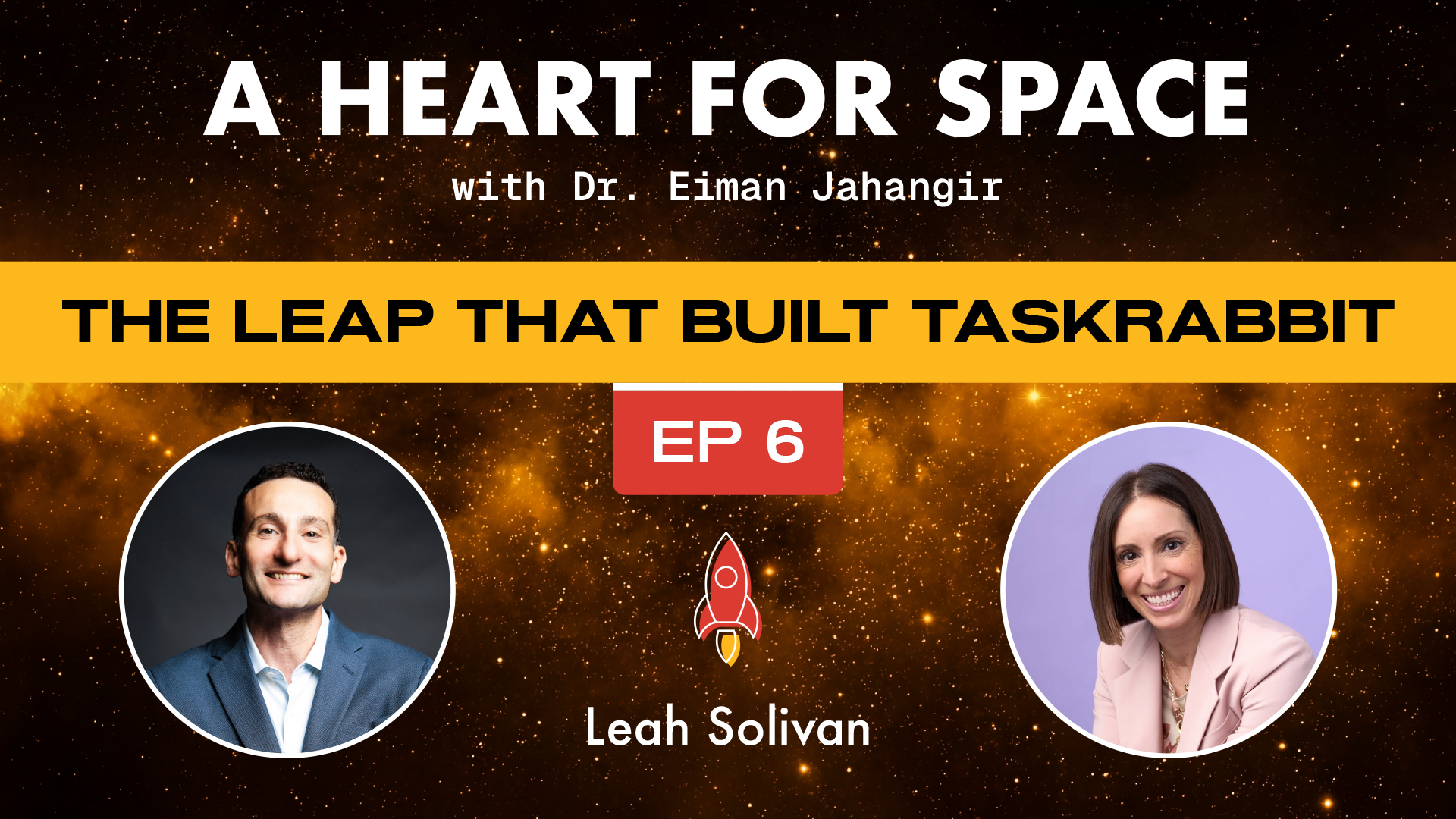
The Leap That Built TaskRabbit | Leah Solivan


Key Takeaways
- Leaving a stable career for entrepreneurship requires a significant leap of faith, as demonstrated by Leah Solivan's transition from IBM to founding TaskRabbit.
- Mentorship, like the guidance Solivan received from Zipcar's CEO, is crucial for building confidence and navigating the early stages of a startup.
- Funding a startup often involves personal financial risk, with Solivan investing her pension and maxing credit cards to launch TaskRabbit.
- Founder identity, including being a Latina in tech, can offer unique perspectives but also present challenges like imposter syndrome.
- Building conviction is a learned skill, essential for making tough decisions and trusting your instincts amidst conflicting advice.
- The true success of a venture like TaskRabbit lies not just in metrics, but in its human impact and ability to solve real-world problems.
- Empowering future founders, especially first-generation entrepreneurs, involves sharing lessons learned about overcoming barriers and taking that initial step.
The Leap That Built TaskRabbit: An Interview with Founder Leah Solivan
In this episode of A Heart For Space, host Dr. Eiman Jahangir sits down with his sister-in-law and the visionary founder of TaskRabbit, Leah Solivan. Together, they delve into the pivotal leap of faith that sparked the creation of TaskRabbit and the unconventional journey required to achieve entrepreneurial success.
Leah Solivan, an engineer by training, shares the profound internal struggle of leaving the secure and stable career she had built at IBM. The relentless pull of an idea she couldn't ignore ultimately led her to take the leap into the uncertain world of startups. She candidly discusses the doubts and anxieties that accompanied this decision, and how invaluable guidance from her mentors provided the confidence and conviction needed to transform her initial concept into TaskRabbit, a groundbreaking company that became a pioneer in the sharing economy.
From IBM Engineer to Sharing Economy Pioneer
The conversation explores the realities of building a business from the ground up. Leah recounts the significant personal financial risks involved, including investing her own savings and navigating the complexities of early-stage funding. She touches upon the pervasive challenge of imposter syndrome, particularly as she didn't initially possess a traditional business background, and how her unique perspective as an engineer allowed her to approach problems differently, often leading to more innovative solutions.
A significant part of the discussion revolves around Leah Solivan's journey as a founder. She reflects on her identity as a Latina in the tech and venture capital world, noting the unique position this afforded her, often granting an 'insider and outsider perspective' that allowed her to perceive dynamics others might miss. This perspective proved invaluable during the arduous fundraising process, which Leah describes as a gauntlet. She reveals that for each funding round, she faced the challenge of pitching over 50 investors to secure a single 'yes,' underscoring the resilience and determination required to succeed.
Building Conviction and Defining Success
Leah emphasizes the critical importance of developing a 'muscle of conviction.' This mental habit involves learning to trust one's own judgment, especially when faced with conflicting advice from experienced individuals. As the ultimate decision-maker, founders must cultivate the ability to rely on their instincts and steer the company forward.
The episode highlights a deeply human moment that defined TaskRabbit's success for Leah. It wasn't a financial metric, but an emotional connection: a mother in San Francisco needing help to accompany her son to chemotherapy in Boston. This instance underscored the profound human impact and real-world value the platform offered, moving beyond transactional exchanges to genuine support.
Looking beyond her foundational role at TaskRabbit, Leah Solivan's passion has evolved. She is now dedicated to empowering the next generation of entrepreneurs, particularly first-generation founders and those from underrepresented backgrounds. Her message is clear: pursuing ambitious goals is less about having perfect credentials and more about cultivating the conviction to take that initial step and believing in your innate ability to create something entirely new. She distinguishes between 'winning' (metrics and revenue) and 'success' (values, ethics, and impact), defining her current success through her ventures aimed at breaking down barriers for aspiring founders.
Key Moments in the Episode:
- The Leap from IBM: Leaving Stability Behind (02:07) - Leah's internal conflict and decision to leave a secure career.
- Finding a Mentor: Meeting the CEO of Zipcar (06:27) - The crucial role of guidance from experienced leaders like Scott Griffith.
- Betting on Yourself: Funding TaskRabbit with a Pension (09:11) - The personal financial risks taken to launch the company.
- Navigating Identity as a Latina Founder (15:06) - Reflections on imposter syndrome and the unique perspective gained from her background.
- The Fundraising Gauntlet: 50 Pitches for One Yes (26:15) - The challenging realities of securing investment.
- Building the Muscle of Conviction (28:35) - Learning to trust one's own instincts and decisions.
- From Dog Food to Soul Food: The Moment TaskRabbit Became Real (28:35) - The emotional realization of the platform's impact.
- Advice for First-Generation Founders (34:29) - Insights for those starting out with limited resources or role models.
- The Space Still Worth Reaching For (36:21) - Leah's vision for empowering future entrepreneurs.
Discover more about Dr. Eiman Jahangir, and preorder your own copy of A Heart for Space, now at https://aheartforspace.com/
Frequently Asked Questions
Who is Leah Solivan?
Leah Solivan is an engineer, entrepreneur, and investor, best known as the founder of TaskRabbit, a company that connects people with taskers for various errands and jobs.
How did Leah Solivan fund TaskRabbit?
Leah Solivan funded the early stages of TaskRabbit by investing her own $27,000 IBM pension and maxing out credit cards, as she lacked access to traditional friends and family funding.
What was the biggest challenge for Leah Solivan when founding TaskRabbit?
Solivan faced significant challenges including the internal struggle of leaving a stable career at IBM, navigating imposter syndrome, and enduring the arduous fundraising process, pitching over 50 investors for each round.
What does Leah Solivan say about mentorship?
Leah Solivan emphasizes the critical role of mentorship, highlighting how guidance from figures like the former CEO of Zipcar provided her with the confidence and perspective needed to build TaskRabbit.
What is the 'muscle of conviction'?
The 'muscle of conviction' is a mental habit Leah Solivan developed, learning to trust her own decisions and instincts after realizing that even experienced advisors can offer conflicting advice.
I had this outsider mindset and outsider perspective that was able to see how things could be done differently. And I think that was necessary for building the company that I did. Welcome to A Heart for Space. I am your host, Dr. Eiman Jahangir. Join me as we uncover what it takes to reach beyond the limits of what we think is possible and turn the biggest dreams into tangible reality. All right. Well, thank you, Leah, for joining us today. I'm pretty excited to have you on the podcast. For those of you who don't know, Leah is actually my sister-in-law, so my wife's sister, because people often get confused, and has done a lot of amazing things. But I always like to start this podcast out as if you were going to come and describe yourself or tell people what you were up to at a dinner party or something like that, how would you describe yourself? Okay, cool. Well, first of all, thank you so much for having me on. My greatest accomplishment is being your sister-in-law, truly. Yeah, right. No, it is. We have so much fun together. We do. And my sister married very well. So, no, I'm so excited, so happy to be able to chat with you. So, if I were at a dinner party, how would I describe what I do? Okay. Well, I am first an engineer, I think second an entrepreneur, and then third an investor. So I started my career at IBM as a software engineer. I had the idea for my company TaskRabbit, which I built, launched, sold over the course of about a decade. And then after that, I became a venture capital investor. And I now invest in early stage companies at, you know, kind of their early origin beginning points. I think I'm sold. I'm going to come work with you. Anytime. Anytime. You are an advisor to one of our funds. So I send you deals. I send you deals all the time. So. Yeah. Part of this podcast is I'm talking to people who have done really great things, accomplished. But the theme comes back to how does someone pursue that hard dream? Because you just said it. You were an engineer. You had a stable job at IBM. And then kind of early on when I was dating your sister Amber... I saw you pivot, which, you know, there's someone like me who grew up being like, you need that stable field. Yeah. Holy smokes. That is cool. But how did you make that decision to go from like stability and W-2 income to chasing your what was your dream at the time? Well, okay, because it's you, Iman. I'm going to give you a real authentic, honest answer here because, you know, I would answer that in the normal way, which would be like, I was so passionate about the idea. I couldn't put it down. Like, I just became obsessed with connecting people in real life to get errands. And, like, that's how TaskRabbit was formed. But, like, I got to say, you remember you were there. We were all living in Boston. Yeah. And I don't know if you recall, but like, or what it looked like to you from the outside, but it was a big internal struggle for me to let go of the stability of IBM. Yeah. And, you know, our dad, Poppy, he's he was in the Air Force for 35 years, right? Retired, served in the government. Super stable job. Super stable. That was that was my model. I didn't have any models of anyone starting companies or being an entrepreneur. And so it was a big struggle. I also remember, like at IBM, they would win year over year for the best place for women to work. Huh. I didn't know that. Yeah. And like, I would be lying if I didn't say I didn't notice that as a young woman just starting my career. I was like, wow, like I could stay here for 30 years and it would it would be ranked the best place for women to work. Like, that's pretty awesome. But I don't know. I just remember it being a big leap. And then I also remember that. I felt a big sort of separation too, like maybe from family, from my parents, from friends who maybe didn't understand what I was doing. And it was so stressful and it was such a big decision to make that leap that I remember feeling like this, like just so alone and like this gap. Um... So what ultimately made me do it, I mean, again, it was because I was just so obsessed with this idea. With the concept, yeah. And I like it had to exist and I knew I could build it. And so I did. But yeah, those struggles were real. Do you remember like when I was leaving IBM and stuff like from the outside? Do you remember what that looked like to you? Well, I mean, I would say first off for our audience members, this was the first company slash app in the sharing gig economy, which I don't think everyone appreciates. But I mean, it's so iconic. It was in Silicon Valley. I remember seeing that and texting you from the show. I'm like, oh, there it is. But like, it was a big deal. Yeah. I mean, I remember it not being stress free. I think what stuck with me during that time, though, was, you know, and part of like what I tell, like I just got off with some students in Memphis an hour ago, and I was like, you got to find your team. And I think one of the things that I thought was really impressive early on was that you had, and you can correct me if I'm wrong, one of the founders or the founder of Zipcar is one of your mentors. I don't know if she actually, I don't know what other role she served, but it was. Yeah. Clear to me early on, you had someone that could at least help guide you because we don't, I mean, we didn't, I didn't grow up in a business family. My dad still would say, you know, we weren't built for business. We were built for science. You didn't grow up in a business family. So those people are key, I guess. So did that help with having that mentorship help you kind of jump? Yeah, no, that's an excellent point. And I think that is what gave me the confidence to do it. So it was Scott Griffith. He was the CEO of Zipcar at the time. And I didn't know Scott in advance. Like I had no network, right? But I was just talking to friends about the idea over dinner one night. And one of them said, oh, you should email my friend Scott. I think he'd really like what you're working on. I was like, cool, give me his email address. I had no idea he was the CEO of Zipcar. We all knew what Zipcar was, though, at the time. Yes. Because that was like the big thing. There was no Uber. There was no Lyft. It was Zipcar. That was it. And so I emailed Scott like late on a Saturday night, cold email. He wrote me back Sunday morning. He invited me to come by the office to chat with him. And we just hit it off. Yeah. It was great because when I went by his office, Scott was like, wow, like the way you're thinking about TaskRabbit is how I think about Zipcar. It's like placing shared resources in a neighborhood that everybody can use. You're doing the same thing with errands and tasks that I'm doing with cars. Yeah. And, you know, literally just like on a human level to like the nicest man. And he and I met kind of maybe for like a month, week over week for a month. And then he finally said, Leah, I think you're really on to something here. I think you should see how far you can take it. And that was the moment. Like that was... When he said that, I was like, I'm going to quit IBM. I'm going to do it. And I did. And then he actually let me sit at the Zipcar office for free for a year. And this was before workspaces existed too, right? There was no co-working space at that point. No, no, there wasn't. But it was cool because I got to sit in an office with other people. I wasn't alone. It was just me, right? But I also got to see what a really incredible CEO looked like. Okay. Oh, interesting. I saw Scott lead that company every day, walk through the office. I saw how much people respected him, asked him for advice. He would share perspectives. He's so calm, so level. And so that was a really good role model for me, too, for that year as I was starting to build TaskRabbit. And you, and you know, I hear this when I'm not in, I don't have a startup, but I've heard you got to put your money where your mouth is to an extent, because you really do have to, you can't just go look for funding. You also need to be invested financially. And you really were invested financially in TaskRabbit early on. Tell us that story about how you made the decision to not only leave IBM, but take the money you had built up in your retirement at IBM and put it on the line. Yeah. Yeah, well, listen, like, I didn't have any other money, right? Like, a lot of times people are like, oh, for your first round of funding, just like do a friends and family round. Like, I'm like, I don't have friends and family that are going to write $100,000 checks. Like, yeah. That is not my world, okay? Yeah. And so I was always so confused by that. But what I did have was $27,000 in my IBM pension. Amazing. So I had to take it out with a penalty because I was 28 at the time. Yeah. But that $27,000 minus the penalty was what funded the early days of TaskRabbit. That and maxing out credit cards. Yeah. Yeah, maxing out credit cards is pretty wild. And you didn't have like an MBA, you know, and I hear different things like, oh, an MBA is useful. It's not useful. Do you think not coming from that world of like startup business and really coming from it at an engineer angle, was that an asset? Did that allow you to see things differently? Or do you think, oh, maybe it would have been helpful if I had gone to school and had some of those educational pieces? Yeah, I mean, I think it cuts both ways. And as I look back now, I think that I suffered from a lot of imposter syndrome because I did not have the MBA. And I think I made, frankly, bad decisions early on where I didn't trust myself enough because I didn't have the credentials that other people did in the room. But like, whatever, I was just as smart as them, probably smarter. And like, this is not rocket science. Talk about you going to the, like, to orbit. Okay, this is not rocket science. Yeah. This is like spreadsheets and numbers. And like, I was a math major. Like, I should have had more confidence in myself from the beginning to be able to like really figure it out. But, you know, it did kind of affect my confidence, my journey early on. Looking back, I think that... And this is from this may be controversial. OK, my husband has an MBA. He's lovely. He's so smart. Like I have nothing against people with MBAs. But I for me, like I think the most valuable thing I see in people that have MBAs is their network. Oh, interesting. Yeah. They go to business school and they network with all these other like really smart, really amazing people. And they keep that network. And then those people end up at Google and Meta and Facebook and Microsoft and whatever. And then you have contacts everywhere. I think that is a very expensive way to build a network, but it is one way. Well, I mean, it goes back to knowing you're having a team, I guess, right? Like Scott was your team. Yeah. Yeah. So I think like because I didn't have that, I didn't have that network, you know, I do think it gave me an edge. So I think my advantage was. I had this outsider mindset and outsider perspective that was able to see how things could be done differently. And I think that was necessary for building the company that I did. And maybe I couldn't have done it if I had the MBA and was like sort of like groomed and programmed a different way. Maybe you wouldn't have had the idea. Like... Yeah, maybe I would have been like, this is too risky, like too many things can go wrong. Like I heard that a lot, actually, from friends with MBAs, like, oh, I would never build that business. Like, you know, so many things could go wrong. But so I think it's just like you are who you are. You got to embrace whatever skills, whatever resources you have, and they're going to be unique in how you deliver whatever it is you're working on. Yeah. No, I think that, I mean, it's a, it's a. Interesting point, because I often think about, like, is there any point in going back to school? And I think about our children, and I'm like, well, there's definitely a value to going to, like, an Ivy League school for the network. But from an educational standpoint, my state school is probably going to deliver the same education. So it's really like, what are you aiming for in whatever field that might be? No, I totally agree. And I think, like. For our kids, what's going to be interesting, like the future generations, particularly with AI and how pervasive that has become. Like think another decade, like when our kids are ready to go to college. I think a liberal arts education, I think an education in humanities, like I think education and learning history and things that are human, because I think the technology is going to somewhat be taken care of for us. But we're going to need humans in the loop to create experiences and intervene and trust and safety and all these other things. And just like to learn how to think. I mean, I think one of the things we miss is like critical thinking, which college does teach you. I mean, and you. It does. And I think college is going to have to evolve, too, because critical thinking, yes. And how do you prompt? How do you prompt? Yes. Do these GPTs? How do you, you know, like how do you talk to a machine the way, you know, like you've got to I don't know. There's some there's there's a whole piece of education that's going to have to be reformed just with how fast technology is moving. Yeah, no, it's an interesting concept. And I am trying to vibe code, which I've never coded because I was not a software engineer. Yeah. And I have my son doing it because I'm like, you need to at least get familiar. Yeah. Now, you are a Latino woman. You guys are Puerto Rican, you and my wife. Puerto Rico. Puerto Rico. Yeah. Do you think that hurt help or you could just pass and no one would know? For instance, like I can walk down the street, no one knows. But as soon as they hear my name. Yeah. Yeah. Yeah. Yeah. I don't know if you found that. And there are not a lot of companies, you know, in these industries that I think are run by early on by Latinas, especially if you're 20 years ago. No, I know. I mean, like the stats for venture capital are 2% of women receive venture capital funding. 0.6% of Latinas receive venture capital funding. That's wild. It is wild. So here's how I feel about this. I feel like I have been a secret agent my entire life. I passed as white. Okay. And, and so does Amber. Right. And last name can sometimes give it away. Sullivan, but we can also go by Sullivan and like no one bats an eye. Um, So I, I, that is just the truth, right? And that is just a factor of my journey. And so I think what that has given me is sort of this insider and outsider perspective. Like I can sit in rooms where I'm, I pass as white. No one thinks differently. And things are said that may not be said if they felt like there was a woman of color in the room. Right. So you hear things. You hear things. You're kind of like, wow, that's interesting. Right. Um. And so, I don't know. I think it's complicated. I think that, you know, I'm part of the Latino Corporate Directors Association. Oh, very cool. Yeah, so this is a group of Latinos that are placed on boards, public, private boards, etc. It's an amazing organization. We get together, you know, and support each other. And I remember at, like, one of the opening remarks for the sessions, you know, it's like, with Latinos... You can get married. You could have a name change. You're still Latino, but no one knows. Right. So you don't get counted either. Like it's very difficult and nuanced to track these things in this community. So, you know, I've really appreciated that. of course, like my heritage and then also being able to kind of see both sides at all times. I think it's like a very unique perspective that I've had and certainly shaped the way my value system is, how I build companies, how I build teams, right? Like what I want to invest in. So it definitely gives me a very unique lens. No, I remember I was working at The Gap and my manager was like, we're going to mark you as, you know, like Middle Eastern or something. And I'm like, I guess I am Middle Eastern, but I'm also Caucasian. She's like, because we need the diversity. Oh, my God. Fair enough. Fair enough. Yeah. But this is, you know, it's the world we live in. And I think it's exciting because you're, I know. in your latest kind of endeavors, you are working to give more access to startup founders and entrepreneurs, which I think is huge because a lot of it is, one, having a role model like you, so seeing it can be done, and then two, having access to that mentorship, the money, et cetera, that you need to be successful. I mean, it's interesting because I do, I'm very passionate about all of that. But like, I also feel a very strong obligation. In a good way. Yeah, that's good. But it's like I've had this privilege of success. I've gotten to where I am, you know, for a lot of different reasons. And I just feel so much obligation to, like, bring others along. And it's interesting because I look at my peers in the industry, other venture capitalists, you know, they don't feel that obligation. They don't carry that with them in the same way. And so we just need more people, more diverse people, to get in these roles, to be controlling capital, to be helping startup founders, because we come with a different set of perspectives and we want to bring others along. That's awesome. And, you know, there are roadblocks. Things happen. And part of what I like to talk about is perseverance because I think people often will give up too early. You know, maybe they're just like one more no away from getting that yes. So what does that look like on a day to day, particularly when you're trying to raise money, when you're trying to expand internationally as you did with TaskRabbit? And like not the inspiring version, but like the real version of like, how do you just get up and you're like, all right, today kind of sucks, but we got to make it work. Yeah. I mean, honestly, I'm feeling that right now. I'm raising a new fund right now. And it is not easy. This is a terrible time to be raising money in the venture capital industry. Yeah. So I've lived it with TaskRabbit. You know, every single round of funding that we raised, so we raised about $50 million overall the course of 10 years. The majority of it came in like a two to three year period, kind of in the middle. Yeah. And, you know, for every round I raised, none of them were easy. I would talk to 50-plus investors every round. I got one yes every time. One yes. That's it. I mean, it was grueling. And that's hard, like, to share your story over and over and over again. I mean, someone might think it's exciting, but, like— That's the thing. It's like— I knew that it was not a problem with the company or the business or the team or anything I was doing. I knew that because the company was doing well. We were scaling. Yeah. But it was about finding the right investor where it was going to resonate and who wanted to come in and support you. It was like finding a needle in a haystack. And investors have all kinds of different reasons why they're not going to invest. And, you know, these big funds maybe do a deal a year. They look at like thousands of companies. They'll do a deal a year. It's not like a high volume business either. Yeah. Yeah. So, yeah, it is really hard. I mean, I remember asking you this question, which is like, what is the line between perseverance and delusion, right? It's like, it's a very thin line. Yeah. And I think what I go back to is... do you keep going or do you feel like you're being delusional? Like, look at the data. Like, look at the underlying, like, what are the first principles of what you're doing and do they make sense? And is it just that you're not getting the attention or match with the right people that can help? Or is it that the underlying idea is bad? And I think looking at analytics, looking at data, like, really reflecting deeply on that can help determine, like, which side of the line you're on. Yeah. But I think that, I mean, it's a hard thing to determine. Yeah. No, I mean, I tell people they have to enjoy the process because there's not always a guarantee for success. Oh, God. It's harder to enjoy the process when you have $50 million of other people's money. Yeah, I did not enjoy the fundraising process. That you're hopefully feeling responsible for. Yeah, absolutely. And you're like, wow, like, I'm telling this story and, you know, the person's asking me, I'm telling the story about like, oh, outsourcing small jobs, Aaron's tasks. And you're sitting in a room of all these male venture capitalists who don't do Aaron's small jobs. That's right. Yeah. They have people that do that for them. Their wives do that for, you know, it's like, so a lot of times they would be like, oh, let me go home and ask my wife about this idea. Oh, interesting. Or let me have our office admin try it. Yeah. It's kind of like, okay. But like, again, this is the problem with like who's in the room. Like who's in the room and like we need more diverse people in the room so that more ideas resonate. They're not bad ideas. No. I mean, there's a lot of good ideas out there. Just bad delivery sometimes. That can also be a problem. Bad delivery. Absolutely. I'm not saying that was what happened here. I did have an investor stop me in the middle of a pitch once. It was so mortifying. And it was like early on, it was like series A. And I'm, like, going through the slides, and he stops, like, three slides in, and he's, like, he's, like, can we just, can we just stop? He's, like, he's, like, can we just stop? He's, like, I just, I need to show you what an actual pitch deck looks like. No way. And he gets up on the whiteboard, and he's, like, here should be your first slide. Here's your second slide. Wow. And I was, like, oh, my God, this is so weird. Was this early on, or, like, what? Okay, so it was helpful maybe, but not in the best delivery. Yeah, he was very hard. He had bad delivery. He had bad delivery. Maybe he had bad delivery, yeah. If it makes you feel better. I mean, in public speaking and like – Pitching a deck, I imagine there's some similarities. I was speaking to this group of, like, high school students in Memphis this morning via Zoom. Yeah. And the first question the guy gets on, he's like, well, when they told me it was going to be an astronaut, a doctor, I thought it was going to be Johnny Kim. Now, I don't know if you know who Johnny Kim is, but Johnny Kim is, like, the quintessential, pardon my French, badass, Navy SEAL, Harvard Med School astronaut. Whoa. Yeah. Three very successful careers. And he's a Korean-American, so there's memes all over the internet if you meme this guy. Because he's like every Korean person's nightmare. Because how are you going to beat Johnny Kim? Yeah, you can't do it. But the guy was like, I thought this was going to be Johnny Kim. He's like, but you're okay. He's like, you're disappointed. He's like, you're fine, but you're like, great. This is a great one to spread that. You are not Johnny. Yeah. I'm like, no, I wish I was Johnny Kim. He's pretty incredible. We all wish we were Johnny Kim. That's right. That's right. That's so funny. Who knows? You know, the audience can be tough, whatever it might be. Just got to roll with it. You just got to roll with it. Yeah. Here. Was there anything like a mental habit or a belief that served you more than like a skill or strategy? Like, was there something, a mindset that you had? Yeah. Was it confidence in yourself or was it just? Yeah, I would say it built over time. It was not there in the beginning. And I would call it a muscle of conviction. I feel like I like that. I had to like build this muscle of conviction. Yeah. And the conviction was in myself, in my decisions. It was in, you know, the business. It was in, you know, the day-to-day operations, whatever it was. I really had to build that muscle of conviction. Yeah. I think something that surprised me about that was early on. I remember, you know, I'd be faced with a question and I would go get advice as you do. You get advice from a lot of people. I go to Scott. I would go to other CEOs. I would ask them the same question. Here's the problem. What do you think? Yeah, it would give me two very different answers. And I was like, how is it that these two very smart CEOs, very successful, would give me two different answers about the same question? And I think that was the moment I realized that. I was the one that had to make the decision because I was the one, I was the only one that was in the business, that deeply understood the nuances and everything about the business. And that actually, that mentality actually helped me build that muscle of conviction because I was like, I'm fine going to get advice from lots of people, but it's up to me. I got to decide and I got to be confident in what, what my decisions are. So that took some time. people can only give you the advice that they would take. So it's like, it's good to get advice, but once again, it's colored and flavored by everything that's them and they're not you. And they don't have the same set of factors as you do. Yeah. Now, obviously, like you made it, you were getting successful. At what point did you realize that this went from like TaskRabbit might be able to work to, no, this is actually like working and now it's a company, which you were successful. You ended up selling it to Ikea. But like, when did that pivot happen in that 10-year span? Yeah. So... I'm going to give you an answer that may surprise you. I don't know. I knew very early on TaskRabbit was going to be successful. I didn't always know if we were going to win in the industry or win in the space. Yeah. Yeah. And let me explain that. So, you know, I've kind of developed this philosophy around winning versus success. And winning is points on the board, revenue, numbers, analytics. Like you're just crushing those things. Success is winning, but it also is did you act with values? Do you have ethics? Like what sort of impact are you having on that? And so I didn't always know if TaskRabbit was going to win. There were a lot of competitors. It was very stressful to build that company. But I knew we'd be successful. And the moment I knew we'd be successful was when we were open in two markets, Boston and San Francisco. And there was a job posted in San Francisco looking for a tasker in Boston. And the job was. That's pretty cool. Yeah. My son is going through chemotherapy treatment at Mass General Hospital. Hmm. I need someone to go with him to his appointments, sit with him, bring him some food, like just be there with him. And then call me afterwards and tell me like actually how it's going. Yeah. And the tasker that picked up the job in Boston happened to be another mom. And so the bond that these two moms formed across the country was like incredible. And that was the moment I was like, that's it. We're successful. Like, this should exist. This is great. I feel like you need to get those moms on StoryCorps. Right. Oh, my God. I know. I mean, it's an incredible story. It's like, yeah. Yeah. And and and so, you know, we heard about it in the office from both of the moms. Yeah. I mean, like the morale of the team, like the mission, like we were all like, oh, my God, this is like this is why we're building this. Right. So that was the moment. And we're only open in two markets. And I was like, this should exist and we're going to keep trying to build it, you know? I'd say from dog food to soul food. Oh, yes. That's so good. I mean, you would have never imagined that that's how it was going to be used when you started. No, I didn't. I was at a dog food one night. I was like, there's got to be an easy way to get this dog food. That was the extent of the idea at that moment. That was it. That's wild. Yeah. That's wild. Yeah. So you've been successful business. I know you've been successful family, et cetera. What does success look like now for you? Like what would, I know you're raising a fund so you could say, okay, maybe it's raising money for my fund, but I don't think that's how you define it knowing you. So I guess like, what would you define as success in the next few years? Kind of as you're doing what you're doing. Yeah. So, yeah, I built Sold TaskRabbit, jumped to the venture capital side, spent nine years at a firm investing. And now I've spun out my own fund. And I think for me, you know, I've I've really thought about this next chapter and and what I want it to be and what success looks like. And I have my podcast, you know, Breaking Precedent, where I'm interviewing leaders across industries that are shifting society. I have my book coming out in 27, like around those themes as well. And then I have the fund that I'm raising. And I think it all ties together into this bigger vision for, you know, an ecosystem that empowers people to break through. Yeah. And I think it goes back to this like obligation, I feel, of like growing up in a tiny town in Massachusetts, population 4,000 people. Right. With a Dunkin' Donuts. That's it. Yeah. Yeah. Did we even have a Dunkin'? Not growing up. Yeah. Yeah. Yeah. It wasn't even in Shirley. Okay. Yeah. No, Shirley is known for its maximum security prison. Okay. That's what it's known for. Yeah. Um, but it's like growing up with a Puerto Rican father, teeny tiny town, you know, with, with no network, no connections, and then being able to build what I have, like, that is the American dream. Yeah. And so I think, you know, empowering people to break through in the ways they want to break through, whether it's like, I want to be the first person in my family to go to college and get a degree. Yeah. Right. I want to be the first person in my family to start a business. I want to change this, this industry. And so I've just become like obsessed with these people that are doing these amazing things and how they did it. And so I think success for me looks like being able to empower others. to have those breakthroughs as well. And so that's what I'm, you know, trying to do through my platform, through the book, through the podcast. And ultimately with the fund, you know, I want to be able to back that next generation of category defining teams and companies. So, so that it's just, you know, a small goal, small goals. Small goals. No big deal. I will say Leah also started a podcast and started writing her book before I did. So maybe she inspired me to do both. So here we are. Here we are. I'm so excited. We're going to have so much fun in the next 12 to 24 months. I know. I know. We're going to have to hit the book tours. I'll come up to New York when you're up there. Yes. Yes. Okay. And then I guess, you know, kind of pushing it back to the business but the first generation piece what piece of advice would you give to a first generation founder because i think there is there is the hustle right that sometimes comes with immigrants or first generation folks where you're like i need to do this to survive right it's not you're not coming from a place of privilege like you said but like what would you tell them? What would be the one thing to tell them? Like in someone like you had a young person, 22 coming up with you, maybe not with a great idea yet, but just like, this is what I want to do. What would you say? I think I go back to what I wish I had done sooner, which was believe in myself more in the beginning. Yeah. Like build that muscle of conviction. Like that's something like any 22 year old can do. Build the muscle of conviction. how can I get more conviction around things? How can I believe in myself more? How can I not second guess, you know, my instincts or what I'm doing? How can I practice that? And I think, you know, I was 28 when I started TaskRabbit. I'm pretty sure I had a company in me before that. Oh, interesting. It just never happened. Never happened. And that would have been pretty cool, I think, if TaskRabbit would have been my second company and I had left IBM maybe a little bit sooner and done something entrepreneurial first and But I was I was too scared. I didn't know the path, you know, like there were too many other factors. So so that would be my advice is like. Just go for it. I think that's good advice. And then, you know, I guess I'll ask you one last question and I could talk to you for hours, but it better be a good one. Well, we end it with, you know, the podcast is called A Heart for Space, which is what my book is called. Yes, I love it. I love the title so much. Thank you. No, I appreciate it. So what is the space that you are still reaching for? And it doesn't have to be business. It doesn't have to be. But like, what is, yeah, what's the space that you're still reaching for? Because we all have it. Totally. And I love that question. I think it is exactly what I'm doing right now, which is building this ecosystem, empowering people to break precedence. That's it. I love it. That's great. Can you imagine like if everyone in the world was like, I'm going to do this one thing, I'm going to break out and do this one thing that's unique to them, like that would be pretty cool. Well, we expect a Nashville branch of breaking precedent when this thing hits national. And then when it's international, I'll just come wherever it's nice. We'll do it in Puerto Rico. That sounds good. Well, thank you so much. I really appreciate you taking the time. And it's always good to talk to you. So much fun. Thank you, Iman. Thank you for listening to A Heart for Space. If you enjoyed this conversation, be sure to follow the show so you never miss an episode and consider leaving us a review to let us know your thoughts. For more on my work in the pursuit of ambitious goals, visit AHeartForSpace.com and look out for my upcoming book, A Heart for Space. Until next time, I'm Dr. Iman Jahangir. And remember, sometimes the only obstacle to achieving an impossible dream is the courage to keep going.